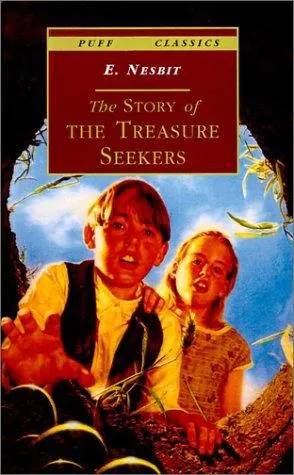
Books like The Story of the Treasure Seekers
The Bastables’ real treasure is Oswald’s magnificent failure to notice how thoroughly his own narration gives him away: every grand scheme becomes funnier, sadder, and more affectionate than he intends.
If you liked The Story of the Treasure Seekers, you’ll love these
Not lookalikes — kindred books. Each one shares something essential with The Story of the Treasure Seekers, and we tell you exactly what.
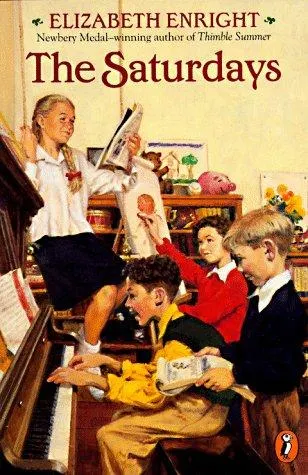
The four Melendy children pool their allowances so that each can have one splendid Saturday alone in New York. Enright understands, as Nesbit does, that children’s projects acquire the gravity of national policy—and that mishaps are funniest when the author respects that gravity rather than mocking it.
The Melendys are distinct, argumentative, loyal personalities, not a tidy collective of “nice children.” Their independence produces comedy, but also moments of genuine enlargement as each discovers a world beyond the family. Published in 1941, this first Melendy novel has become a quietly enduring American classic. Readers who cherish the Bastables’ mixture of enterprise, sibling friction, and underlying tenderness should not miss them.
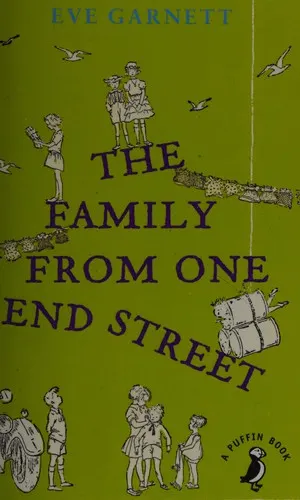
Eve Garnett’s Ruggles family live on very little money, but the novel never turns them into objects of pity or moral instruction. Instead, it finds abundance in their mishaps, private ambitions, improvised solutions, and noisy affection. That is precisely Nesbit’s gift too: financial anxiety remains real while comedy prevents hardship from defining the children.
Each Ruggles child gets an episode shaped by an intensely reasonable idea that reality then complicates. Garnett’s eye is warm but unsentimental, and her practical details make every triumph satisfying. Winner of the Carnegie Medal, the novel was groundbreaking in centering a working-class family in British children’s fiction; more importantly, it remains irresistibly alive. The Ruggleses deserve a place beside the Bastables in any reader’s affections.
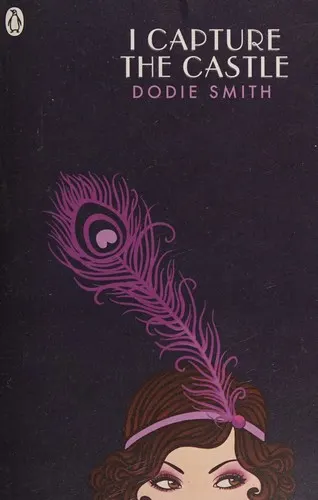
Cassandra Mortmain begins her journal in a kitchen sink and records life in a decaying castle with wit sharp enough to make poverty picturesque without ever making it harmless. Like Oswald, she is a first-person narrator whose voice is the book’s great event: observant yet inexperienced, theatrical yet candid, and continually revealing more than she understands.
This is a more grown-up novel, concerned with artistic vanity, first love, and the dangerous appeal of turning one’s family into a story. But its eccentric household, precarious finances, rescue fantasies, and rapid shifts between farce and ache will feel deeply familiar to a Nesbit reader. Long beloved as a twentieth-century classic, it is one of those rare novels whose opening charm deepens into something piercing—and whose narrator becomes almost impossible to leave behind.