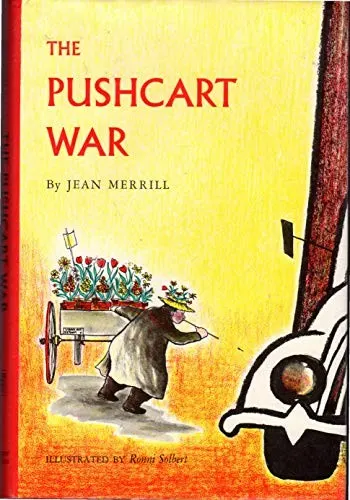
Books like The Pushcart War
It feels like a solemn history book commandeered by the funniest child in the city: every statistic, tactic, and official proclamation becomes evidence that organized smallness can defeat swaggering power. These three novels share that faith in ingenuity, collective action, and jokes sharp enough to expose how the world works.
If you liked The Pushcart War, you’ll love these
Not lookalikes — kindred books. Each one shares something essential with The Pushcart War, and we tell you exactly what.
Merrill’s best companion to The Pushcart War turns elementary-school arithmetic into gleeful economic rebellion. When Rufus Mayflower realizes how little toothpaste actually costs to make, he and his friend Kate begin challenging an industry built on inflated prices, extravagant packaging, and persuasive nonsense.
The pleasure lies in watching children reason their way through supposedly adult systems. Merrill explains manufacturing, advertising, and profit without ever sounding instructional; each practical detail becomes part of the comedy and the adventure. Anyone who cheered for the pushcart vendors’ homemade weapons will recognize the same exhilarating idea here: enormous institutions may look invincible only because nobody has done the calculation.
A strangely selected group of tenants moves into Sunset Towers, where the death of a wealthy industrialist draws them into an elaborate contest of clues, partnerships, names, and money. Raskin treats the reader as another player: scraps of language matter, apparent background details acquire comic force, and nearly everyone is clever in a different way.
Like Merrill, she builds a miniature society whose rivalries reveal larger truths about wealth, ambition, prejudice, and cooperation—without sacrificing velocity or fun. The novel won the Newbery Medal and has remained a puzzle-story touchstone because its construction is astonishingly exact. Reading it once is a delight; rereading it reveals how thoroughly Raskin was playing fair.
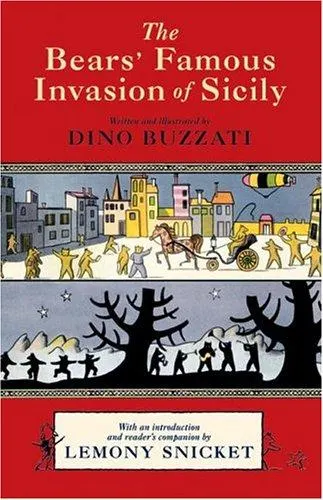
Hunger—and the loss of the bear king’s son—brings an army of bears down from the mountains and into conflict with the humans of Sicily. Buzzati narrates their campaign with the ceremonial confidence of an old national chronicle, even as the events grow increasingly extravagant; his own theatrical illustrations make the book feel like an artifact from a particularly mischievous civilization.
This Italian classic shares The Pushcart War’s delicious mismatch between grand historical rhetoric and absurd combat, but its satire gradually reaches beyond victory to ask what power and prosperity do to the victors. It is funny, swift, melancholy, and far wiser than its storybook appearance suggests—the rare children’s novel whose political sting becomes stronger as its wonders accumulate.