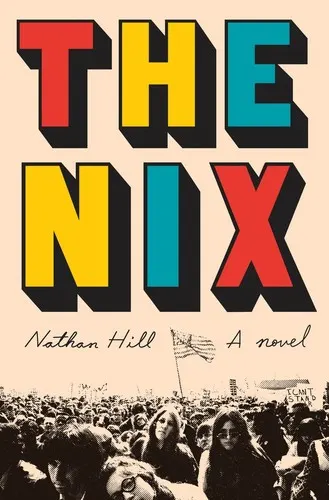
Books like The Nix
After its last page, the appetite is for another big, funny, emotionally exact novel—one that can ricochet through private grievances, public delusions, and whole decades of American life without losing sight of the wounded people underneath.
If you liked The Nix, you’ll love these
Not lookalikes — kindred books. Each one shares something essential with The Nix, and we tell you exactly what.
Hill’s second novel confirms that The Nix was no lucky accident. Jack and Elizabeth begin as young Chicago idealists, each secretly watching the other through facing apartment windows; years later, their marriage has become a thicket of expectations, theories, and self-protective stories.
The familiar pleasures are all here: bravura digressions, devastating comic set pieces, intellectual curiosity, and a gift for showing how fashionable ideas infiltrate intimate life. But Wellness is not The Nix repeated. It is more concentrated and mature, using psychology, algorithms, placebo research, parenting culture, and real-estate fantasy to ask whether love can survive the explanations we invent for it. Anyone who admired Hill’s ability to turn satire into compassion will find that ability deepened here.
This Booker-shortlisted Irish family epic has The Nix’s rare combination of velocity, structural daring, absurdity, and accumulating heartbreak. The Barnes family is coming apart: the car business is failing, the parents are behaving strangely, and their children are trying to escape the consequences. Murray gives each of them a distinct narrative world, altering voice and form until the family’s shared history looks radically different from every angle.
What makes the novel irresistible is its tonal nerve. A scene can be socially excruciating, wildly funny, and ominous at once; a running joke can quietly expose a lifelong injury. Like Hill, Murray understands that families are storytelling machines—and that the stories meant to protect us often do the most damage. The Bee Sting is enormous yet fiercely propulsive, the kind of novel whose readers press it on friends because discussing it feels almost compulsory.
If The Nix’s sharpest pleasure was watching one family’s evasions become a portrait of a nation, The Corrections is essential. The aging Lambert parents want their three adult children home for one last Christmas; those children, meanwhile, are entangled in professional vanity, financial schemes, marital failure, and elaborate attempts to become someone else.
Franzen’s National Book Award winner helped define the modern American social novel, but its reputation rests on more than scope. Its comedy is painfully observant: corporate euphemisms, therapeutic language, consumer desire, and family rituals all become instruments of self-deception. Yet the Lamberts are never merely targets. The book keeps finding fear, loneliness, and stubborn love beneath their ridiculousness. It offers the same exhilarating shift The Nix performs at its best: satire widening, almost imperceptibly, into mercy.