Books like The Necrophiliac
Reading The Necrophiliac is like finding a love letter inside a reliquary: the language is sumptuous, the comedy glacial, and the obscenity gradually reveals an almost unbearable solitude. These three novels likewise make transgression inseparable from style.
If you liked The Necrophiliac, you’ll love these
Not lookalikes — kindred books. Each one shares something essential with The Necrophiliac, and we tell you exactly what.
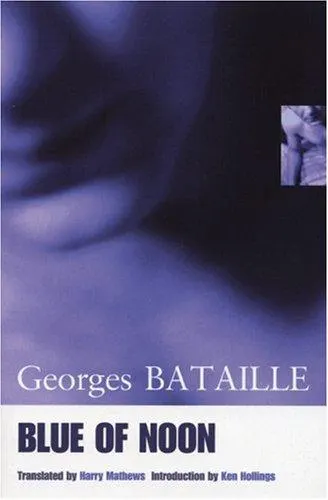
Bataille shares Wittkop’s conviction that erotic desire becomes most revealing when it brushes against disgust, death, and social catastrophe. His narrator confesses his compulsions without asking for absolution; the prose moves between feverish intimacy and brutal lucidity, making degradation feel metaphysical rather than merely sensational.
Written in 1935 but withheld until 1957, Blue of Noon became a touchstone of transgressive literature. Its combination of sexual extremity, bleak comedy, and historical dread gives Wittkop’s private danse macabre a wider, politically ominous echo. Few novels make moral nausea feel so strangely exhilarating.
Ogawa offers the quieter, icier kinship. At a shabby seaside hotel, a teenage girl hears an older man speak with startling cruelty and becomes fascinated by the authority in his voice. From that simple beginning, Ogawa examines submission, secrecy, and loneliness with unnerving composure.
What will appeal most is her refusal to tell the reader when to recoil. Like Wittkop, she writes taboo desire in polished, exact sentences, allowing tenderness and violation to occupy the same space. Ogawa is one of Japan’s most internationally admired contemporary novelists, and Hotel Iris displays her singular gift for making a small, immaculate world feel more disturbing than any spectacle.
For the intoxication of Wittkop’s voice—the sense that elegance itself is luring you somewhere indefensible—read The Marbled Swarm. Cooper’s wealthy, cultivated narrator speaks in a private verbal style inherited from his father, full of evasions, refinements, and predatory charm. The language does not decorate the danger; it is the principal instrument of it.
Cooper is a foundational figure in contemporary transgressive fiction, but this is among his most formally audacious novels: baroque, funny, sexually menacing, and deliberately unstable. Its architecture of stories within stories rewards the reader who admired how Wittkop turns monstrosity into an aesthetic discipline. Refusing it means missing one of the rare modern novels whose prose is genuinely complicit in its crimes.