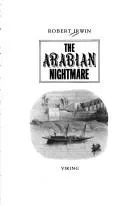
Books like The Arabian Nightmare
Potocki turns storytelling into an endlessly opening set of boxes; Flann O’Brien turns logic into a trapdoor. Between those extremes, Milorad Pavić offers a book assembled from dreams, legends, and mutually incompatible truths. All three reproduce the rare pleasure of Robert Irwin’s novel: the feeling that erudition, comedy, and nightmare have conspired against reality.
If you liked The Arabian Nightmare, you’ll love these
Not lookalikes — kindred books. Each one shares something essential with The Arabian Nightmare, and we tell you exactly what.
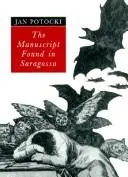
This is the essential next book. A young officer crossing the Sierra Morena encounters corpses, alluring sisters, cabbalists, hermits, brigands, and storytellers whose tales contain further tales until narrative itself becomes a kind of enchantment. As in The Arabian Nightmare, seduction and terror are inseparable, and every explanation merely opens another uncertainty.
Potocki’s eighteenth-century cosmopolitan learning gives the novel astonishing range: theology, libertinism, folklore, mathematics, and occult speculation all become parts of the same elaborate game. Yet its intricacy never smothers its pleasures; it remains funny, eerie, erotic, and compulsively readable. Long cherished as a cult masterpiece—and made newly accessible through modern restorations and translations—it is one of the great ancestors of the labyrinthine novel. Missing it would mean missing the grandest version of the narrative maze Irwin so brilliantly renovates.
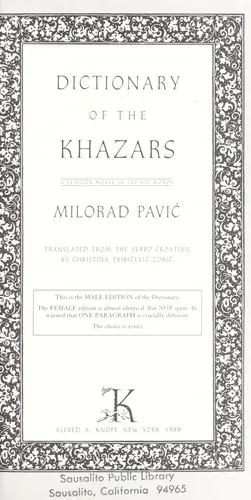
Pavić disguises his novel as three competing lexicons—Christian, Islamic, and Jewish—about a vanished people and their disputed conversion. Entries echo, contradict, and rewrite one another; dreams pass between lives; historical evidence behaves like folklore. The reader becomes an investigator in a case whose clues may have been planted by the book itself.
A lover of Irwin will recognize the exhilarating distrust of authoritative scholarship: footnotes, manuscripts, sectarian arguments, and exotic marvels are simultaneously convincing and suspect. But Pavić’s sensibility is distinct—more crystalline, melancholy, and incantatory. On publication it became an international literary phenomenon and remains the Serbian writer’s defining work. Few novels make rereading feel so much like discovering a second book hidden inside the first.
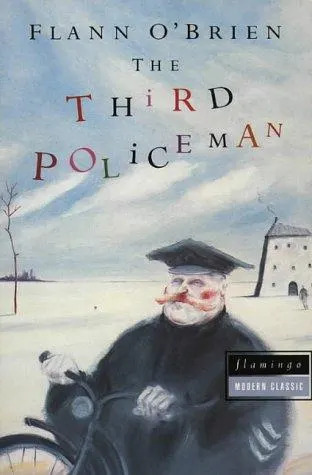
The unnamed narrator begins with murder, an obsession with the eccentric philosopher de Selby, and the expectation that the world will continue to obey ordinary rules. It does not. Soon he is among policemen whose serene explanations of bicycles, atoms, eternity, and measurement are impeccably reasoned and completely deranged.
What links O’Brien to Irwin is not setting but method: both create nightmares out of pedantry. Scholarly commentary proliferates, jokes become metaphysical threats, and language calmly certifies the impossible. The result is at once hilarious and deeply unsettling—the rare comic novel whose absurdity produces genuine dread. Rejected during O’Brien’s lifetime and published posthumously, it has since become a fiercely loved cult classic. Its peculiar logic lodges in the mind permanently; after reading it, bicycles and footnotes never look entirely innocent again.