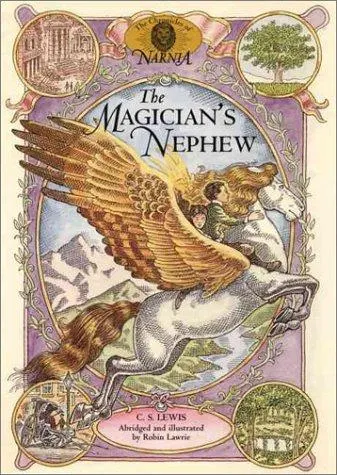
Books like The Magician's Nephew
—because what lingers after The Magician’s Nephew is not merely Narnia’s beginning, but its mingling of wonder, danger, temptation, and moral consequence. These three books cast that same deep spell.
If you liked The Magician's Nephew, you’ll love these
Not lookalikes — kindred books. Each one shares something essential with The Magician's Nephew, and we tell you exactly what.
Lewis regarded George MacDonald as one of his great imaginative masters, and here the inheritance is unmistakable. Princess Irene lives in a mountain castle above a subterranean goblin kingdom, while a mysterious, radiant great-grandmother offers guidance that must sometimes be trusted before it can be understood.
Like Lewis, MacDonald makes faith tangible without reducing it to allegory: a thread, a song, a half-lit staircase can carry spiritual weight. The novel combines cozy nursery-story warmth with genuine darkness, and Irene’s courage has the same clear, unsentimental quality as Digory’s. To love Lewis’s enchanted moral atmosphere and miss the book that helped teach him how to create it would be to leave one of fantasy’s richest family connections unexplored.
If Digory’s impulsive striking of the bell fascinated you—the instant when curiosity becomes choice and choice acquires enormous consequences—Ged will feel like a compellingly close relation. He is a gifted boy on the island of Gont, impatient to discover the reach of his power; Le Guin treats magic not as wish fulfillment but as a force bound to character, language, and responsibility.
Her prose is lean, grave, and luminous, giving Earthsea the authority of an old legend rather than the busy texture of an invented franchise. This foundational fantasy novel has influenced generations of writers, yet its greatest power remains intimate: it understands pride, fear, and the difficult work of becoming whole. Few books better match Lewis’s ability to make a young person’s moral decisions feel cosmically important.
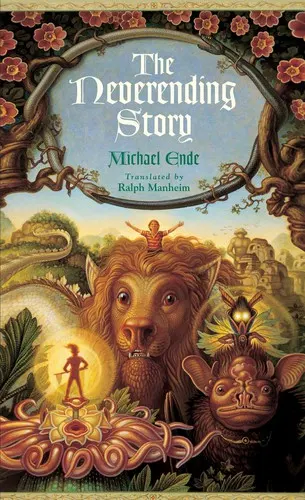
Bastian Balthasar Bux begins as a lonely boy hiding away with a stolen book—and soon reading becomes something far stranger and more consequential than escape. Ende captures the particular thrill found in the Wood between the Worlds: the sense that stories and worlds are alive, that they may call to us, and that entering them changes both traveler and realm.
This internationally beloved German classic is much richer and more unsettling than its famous film adaptation suggests. Its marvels are lavish, but its real subject is desire: what we ask imagination to give us, what our wishes cost, and how creation can shade into possession. The physical book itself often reinforces the enchantment through two-colored printing for its intertwined realities. Readers who cherish Aslan singing Narnia into being will find here another unforgettable vision of imagination as both gift and test.