
Books like All Fours
What if the body you thought belonged to your settled life suddenly demanded an entirely different one? These three novels share All Fours’ exhilarating willingness to treat desire, marriage, art, and female freedom as one gloriously destabilizing problem.
If you liked All Fours, you’ll love these
Not lookalikes — kindred books. Each one shares something essential with All Fours, and we tell you exactly what.
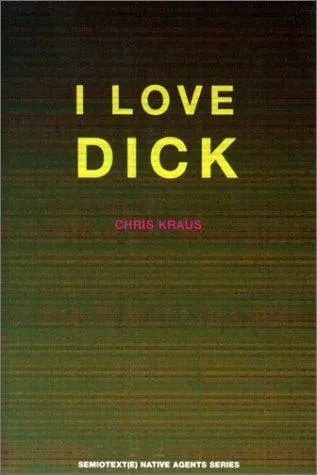
Like Miranda July, Kraus understands that desire can be humiliating, intellectually fertile, ridiculous, and genuinely transformative all at once. A married filmmaker becomes obsessed with a man named Dick and turns that obsession into a torrent of letters, criticism, confession, and performance. The embarrassing parts are not edited out; they become the material of the art.
First published in 1997, I Love Dick grew from cult curiosity into a feminist landmark whose influence runs through contemporary autofiction. Its great provocation is also its great pleasure: a woman’s apparently excessive feelings may be not a private failure but a way of thinking. If All Fours made you crave more work in which appetite blows open both domestic life and artistic form, this is indispensable.

Offill captures the vertigo of realizing that becoming a wife and mother has not extinguished the unruly artist who existed before those roles. Her narrator moves through marriage, parenthood, betrayal, and thwarted ambition in brief, glittering fragments—jokes, facts, memories, and sudden stabs of dread.
The novel’s compression makes every line feel charged; it can pivot from cosmic loneliness to an exterminator’s advice without losing emotional force. Since its publication, it has become a touchstone for fragmented fiction about marriage because its formal ingenuity never disguises the stakes. It offers the All Fours reader another rare combination: domestic crisis rendered with savage wit, formal daring, and an almost physical sense of a self fighting not to disappear.
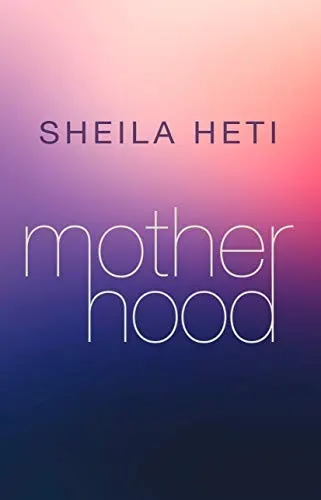
A woman nearing forty tries to decide whether she wants a child—or merely fears the consequences of refusing the life expected of her. Heti turns that question into an intimate philosophical investigation, consulting coin tosses, dreams, art, her body, her partner, and the inherited voices of other women.
What links Motherhood to All Fours is its refusal to make female ambivalence tidy or exemplary. The narrator can be vain, frightened, funny, mystical, and piercingly lucid within a page; bodily time becomes both mundane pressure and metaphysical mystery. Heti’s novel earned devoted readers because it articulates thoughts many women are trained to soften or suppress. Read it for the unnerving liberation of watching a woman insist that uncertainty itself deserves a complete work of art.