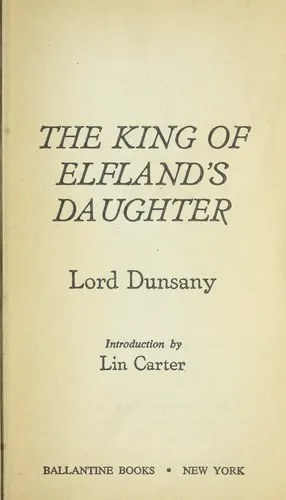
Books like The King of Elfland's Daughter
Up the valley to Erl come its grave-faced representatives, carrying the wonderfully unreasonable demand that their land be ruled by magic. These three novels share Dunsany’s deeper enchantments: stately language, perilous wonder, and the ache of living between mortal time and a realm that obeys other laws.
If you liked The King of Elfland's Daughter, you’ll love these
Not lookalikes — kindred books. Each one shares something essential with The King of Elfland's Daughter, and we tell you exactly what.
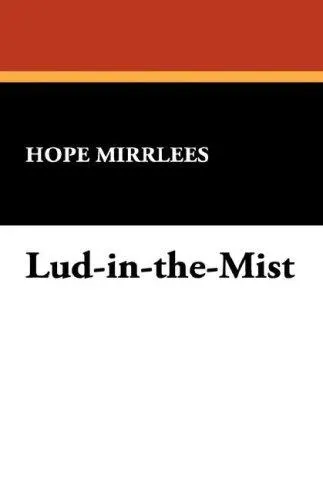
No novel comes closer to Dunsany’s marriage of fairy tale, social comedy, and metaphysical unease. Lud is a respectable, sensible town whose citizens have outlawed even the mention of neighboring Fairyland—especially its intoxicating fairy fruit. When that forbidden influence begins slipping across the border, civic complacency gives way to something stranger and more unsettling.
Mirrlees writes with sly wit rather than Dunsany’s biblical grandeur, but she shares his sense that enchantment is not escapism: it is a dangerous necessity, exposing everything ordinary life has suppressed. Long neglected after its 1926 publication, Lud-in-the-Mist has become a passionately championed classic of modern fantasy. Its final effect—mischievous, melancholy, and transformative—is unforgettable.
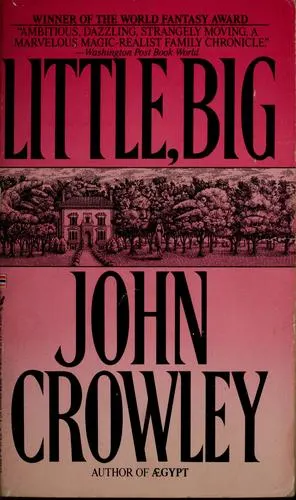
Crowley takes the longing at the heart of The King of Elfland’s Daughter—the attraction between human domestic life and an inaccessible other world—and expands it into a many-generational family history. Smoky Barnable walks toward the extraordinary house called Edgewood to marry Daily Alice Drinkwater, whose family lives beside a secret that may be a destiny, a delusion, or a fairy tale too large for them to perceive.
The pleasure lies in Crowley’s patient accumulation of wonders: peculiar architecture, family legends, intimations glimpsed at the edge of consciousness. Like Dunsany, he understands that proximity to Faerie brings bewilderment and loss as well as beauty. Winner of the World Fantasy Award and now revered as a masterpiece of American fantasy, Little, Big offers that rarest sensation: the world seems more mysterious after you close it than before you began.
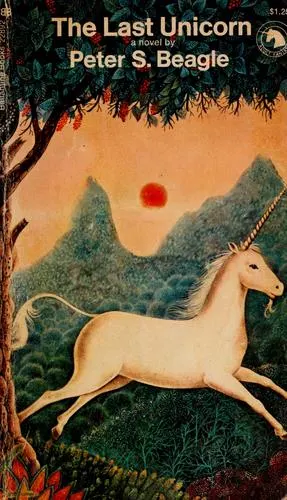
Beagle’s unicorn discovers that she may be the last of her kind and leaves her forest to learn what happened to the others. That premise becomes a poised, sorrowful meditation on immortality encountering change—the very tension that gives Dunsany’s novel its emotional power.
Beagle’s prose can turn from crystalline lyricism to dry comedy in a sentence. His characters know the conventions of fairy tales yet remain helpless before the deeper laws those tales contain; magic is glorious, absurd, costly, and never merely decorative. The Last Unicorn has inspired unusual devotion across generations because beneath its apparent simplicity lies a mature understanding of love, memory, and mortality. Readers who treasure Dunsany’s mingling of splendor and sadness should consider it indispensable.