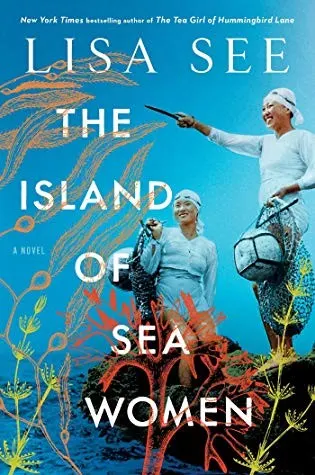
Books like The Island of Sea Women
The Island of Sea Women and Snow Flower and the Secret Fan both turn a bond between two women into a moral world where intimacy can preserve a life—and wound it.
If you liked The Island of Sea Women, you’ll love these
Not lookalikes — kindred books. Each one shares something essential with The Island of Sea Women, and we tell you exactly what.
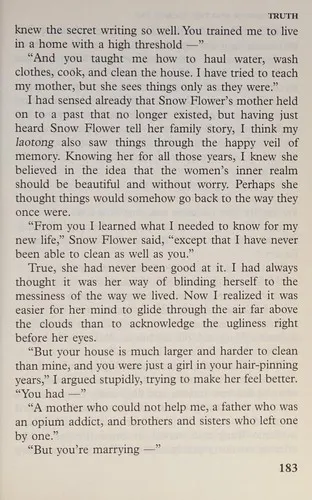
This earlier Lisa See novel contains the emotional qualities that make The Island of Sea Women so powerful: a lifelong female friendship, a private language born within a restrictive culture, and the terrible consequences of misunderstanding someone you love. In nineteenth-century China, Lily and Snow Flower communicate through nüshu, a script used by women beyond men’s notice.
See makes domestic customs and women’s work feel as consequential as public history. Most compellingly, she refuses to idealize friendship: devotion coexists with pride, resentment, unequal fortune, and belated recognition. One of See’s defining novels, it offers the same piercing realization that a shared past can look radically different from either side.
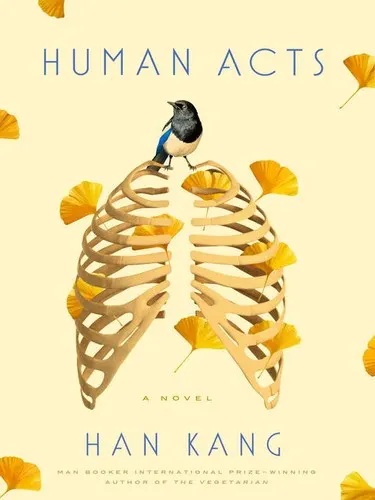
If the Jeju uprising was the part of The Island of Sea Women that left the deepest mark, read Human Acts. Han Kang’s brief, devastating novel begins amid the 1980 Gwangju uprising, with a boy searching among the dead for his friend. From there, the narrative passes between people whose bodies, consciences, and relationships have been altered by state violence.
Han—now a Nobel laureate—writes with extraordinary restraint: the novel is harrowing without exploiting suffering, and formally daring without becoming cold. Like See, she asks what survivors owe the dead and whether silence protects people or abandons them. Few novels show more powerfully how an atrocity continues long after official history declares it finished.
Pachinko shares The Island of Sea Women’s gift for making vast historical forces visible through work, marriage, food, money, shame, and stubborn daily endurance. Beginning in Japanese-occupied Korea, Min Jin Lee follows a family whose survival repeatedly depends upon women doing what respectability says they should not—and bearing costs others scarcely notice.
A National Book Award finalist, the novel has earned its enormous readership through the cumulative force of its characters rather than melodrama. Its judgments are compassionate but never sentimental, especially about sacrifice and the compromises demanded of outsiders. By the end, history no longer feels like a backdrop: it feels like pressure exerted on every private choice.