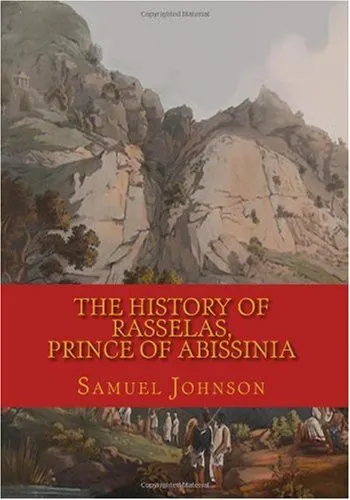
Books like The History of Rasselas, Prince of Abissinia
Rose Macaulay’s The Towers of Trebizond may seem an eccentric successor to Johnson, yet its comedy likewise carries an undertow of spiritual dissatisfaction: both books test alluring schemes for happiness and find the heart stubbornly unconvinced. The other choices pursue that inquiry through ferocious satire and austere intellectual grandeur.
If you liked The History of Rasselas, Prince of Abissinia, you’ll love these
Not lookalikes — kindred books. Each one shares something essential with The History of Rasselas, Prince of Abissinia, and we tell you exactly what.
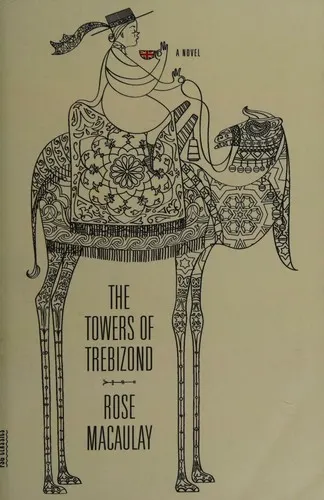
Macaulay begins with an unforgettable comic expedition to Turkey, involving an eccentric aunt, a camel and grand plans for social improvement. Beneath the sparkling travel comedy, however, lies a Johnsonian conflict between the life one admires and the life one can actually bring oneself to live.
Like Rasselas, the novel is funny because its characters explain themselves so well—and moving because explanation changes so little. Macaulay’s poised, mischievous sentences repeatedly open onto loneliness, compromised faith and the insufficiency of pleasure. Long treasured as her masterpiece, it offers that rare Rasselas mixture: intellectual comedy that gradually reveals itself as an inquiry into the divided heart.
Candide asks much the same question as Rasselas—what account of life can survive contact with experience—but answers in a radically different tempo. Where Johnson proceeds through stately conversations and melancholy reflection, Voltaire turns philosophical argument into a sequence of devastating comic collisions.
Its famous attack on facile optimism is only part of its appeal. The real pleasure for a Johnsonian reader is watching abstractions tested against stubborn reality, while every confident system proves narrower than human suffering. Few philosophical tales have had greater influence, and even fewer remain so quick, lucid and genuinely funny. Reading it beside Rasselas makes both books sharper: they become rival masterpieces of eighteenth-century disillusionment.
Hesse enlarges Johnson’s question—how should one choose a life?—into the portrait of an entire civilization devoted to cultivated intelligence. In Castalia, scholarship, music and contemplation have been refined into an almost sacred order; Joseph Knecht’s education lets Hesse examine both the beauty of that ideal and the claims it excludes.
A reader who relishes Rasselas’s debates among rival ways of living will find here a more expansive, immersive version of the same pleasure. Ideas become institutions, disciplines and loyalties rather than mere positions in an argument. Hesse’s final novel, central to the reputation that culminated in his Nobel Prize, is patient but never merely academic: its deepest subject is whether even the noblest system can contain a whole human life.