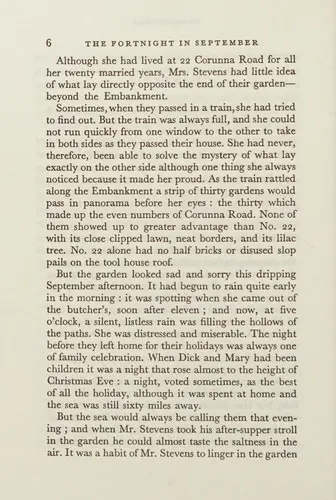
Books like The Fortnight in September
More fiction in which small routines become quietly momentous: observant, humane novels that find comedy, dignity and the ache of passing time in apparently uneventful lives.
If you liked The Fortnight in September, you’ll love these
Not lookalikes — kindred books. Each one shares something essential with The Fortnight in September, and we tell you exactly what.
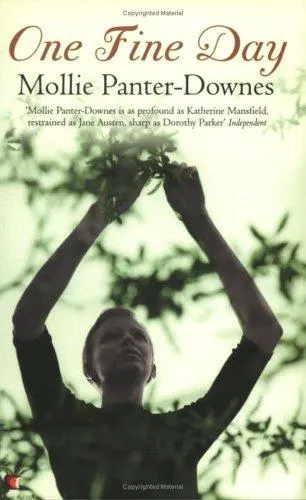
On a summer day in 1946, Laura Marshall moves through household chores, village errands and family tensions while registering how completely the war has altered English life. Panter-Downes gives practical details the same revelatory power Sherriff gives packed suitcases, railway timetables and meals: each minor inconvenience exposes a vanished certainty or a newly possible freedom.
Now prized as a neglected classic of postwar fiction, the novel is exquisitely alert to atmosphere, social embarrassment and unspoken feeling. Its single ordinary day contains an entire historical transformation, yet it remains intimate, warm and wonderfully readable.
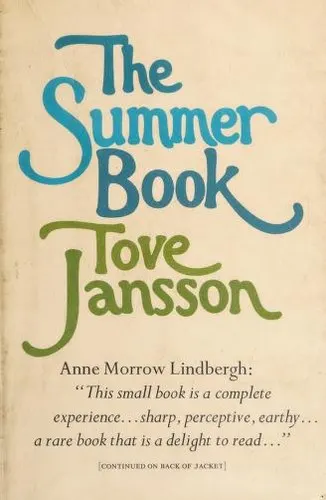
An elderly artist and her young granddaughter spend the summer on a small Finnish island, arguing, inventing games, studying the weather and testing one another’s independence. Jansson understands, as Sherriff does, that holidays are made memorable not by grand incidents but by private rituals, fleeting irritations and the sharpened awareness that the season cannot last.
Best known initially as the creator of the Moomins, Jansson is now equally revered for this spare adult novel. Its short chapters are funny, unsentimental and piercingly alive to rocks, moss, storms and silences. Few books make companionship—or summer itself—feel so precious.
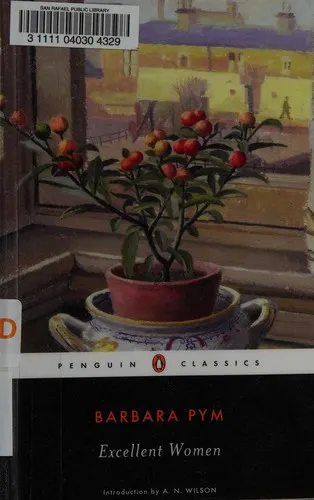
Mildred Lathbury is the sort of capable unmarried woman whom everyone expects to arrange the tea, soothe awkwardness and solve practical problems without having needs of her own. Her new neighbours and the local clergy provide modest disturbances, but the real pleasure lies in Pym’s exact calibration of manners: a badly timed remark or an unwanted confidence can carry the force of high drama.
Readers who loved Sherriff’s affectionate attention to ordinary people will recognize the same refusal to condescend. Pym is sharper and funnier, with an unmatched ear for self-deception, yet her irony protects rather than diminishes her characters. Philip Larkin helped champion her return from neglect, and this remains the novel that turns many readers into devoted Pym enthusiasts.