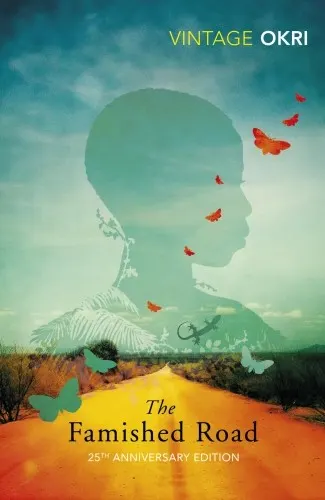
Books like The Famished Road
Wilson Harris’s Guyanese rainforest is the place to begin: like Okri, he makes landscape, history, dream and consciousness impossible to separate. These three novels share The Famished Road’s deepest power—its ability to turn storytelling itself into a passage between visible suffering and invisible worlds.
If you liked The Famished Road, you’ll love these
Not lookalikes — kindred books. Each one shares something essential with The Famished Road, and we tell you exactly what.
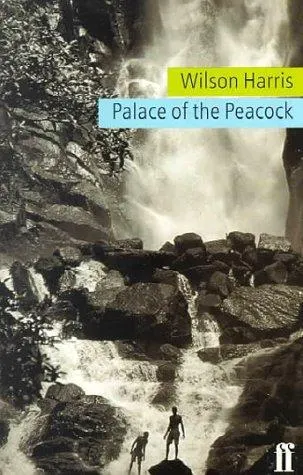
A crew travels upriver through the Guyanese interior, but the journey soon escapes ordinary geography: identities overlap, time folds back upon itself, and the forest seems to dream the people moving through it. As in The Famished Road, the supernatural is not decorative fantasy; it is the form taken by histories too violent and entangled for realism to contain.
Harris’s prose is denser and more compressed than Okri’s, yet it has the same visionary daring—the sense that every image might open into another dimension. Barely longer than a novella, Palace of the Peacock became a cornerstone of Caribbean modernism and the first volume of Harris’s Guyana Quartet. Readers willing to surrender to its currents often find it inexhaustible: a small book that seems to contain an entire cosmology.
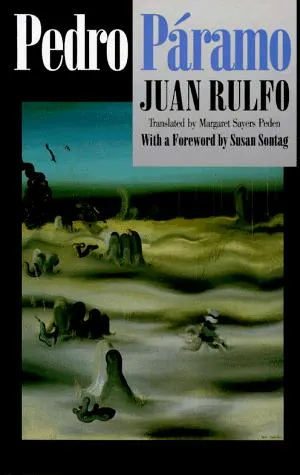
Juan Preciado enters the parched Mexican town of Comala looking for the father he has never known. What he encounters is a place made of murmurs, fragments and memories, where voices move across the boundaries between past and present, life and death.
Where Okri achieves enchantment through abundance, Rulfo does it through silence. His spare sentences leave political cruelty, longing and abandonment suspended in the air like heat. Pedro Páramo is one of Latin American fiction’s defining novels; García Márquez credited it with helping release his own imagination and reportedly knew it nearly by heart. Its spectral chorus will feel uncannily familiar to an Okri reader, but its severe, haunting music belongs to no other book.
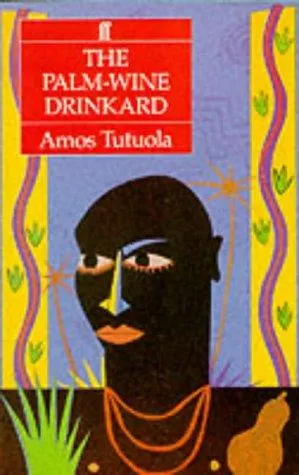
After losing the tapster who supplies his beloved palm wine, Tutuola’s narrator sets out for the land of the dead and passes through a succession of marvelous, comic and terrifying encounters. The kinship with Okri lies less in those spirits than in the storytelling grammar: transformations occur without apology, horror jostles against mischief, and the invisible world is treated as part of everyday experience.
Published in 1952, The Palm-Wine Drinkard brought Tutuola international acclaim and became a landmark of Nigerian literature in English. Its self-fashioned language—drawing energy from Yoruba oral storytelling while refusing polished literary decorum—still feels audacious. It is not merely a precursor to The Famished Road but a fiercely original pleasure in its own right: swift, strange and alive with the freedom that later writers, Okri among them, would make their own.