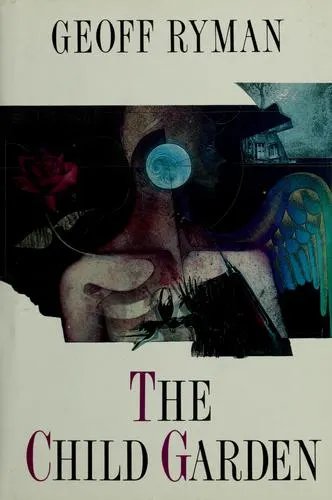
Books like The Child Garden
—and because its real magic lies in making biology, art, oppression, and queer love feel inseparable, these three novels carry forward its deepest pleasures.
If you liked The Child Garden, you’ll love these
Not lookalikes — kindred books. Each one shares something essential with The Child Garden, and we tell you exactly what.
Maya Andreyeva is a journalist whose nervous system is wired into both her work and the machinery that monitors her. From that premise, Carter creates a future in which surveillance is not merely something imposed from outside: it enters memory, perception, and intimacy.
Like Ryman, Carter understands that the most frightening political systems colonize the inner life—and that love can be both refuge and vulnerability. The prose is compressed and radiant, the ideas arrive at cyberpunk velocity, and the emotional stakes remain painfully human. This singular cult novel has inspired fierce devotion precisely because nothing else quite occupies its territory. If The Child Garden made you want science fiction that can wound as deeply as it dazzles, this is indispensable.
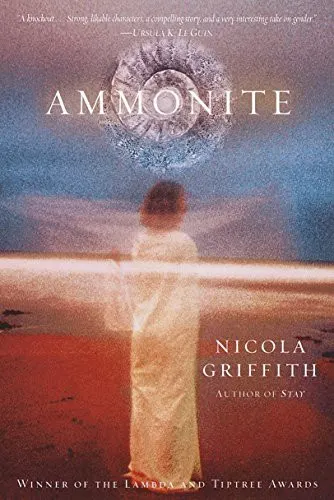
An anthropologist arrives on a quarantined planet to test a vaccine and study a human society transformed by generations of isolation. The striking thing, however, is not the biological puzzle but Griffith’s refusal to separate knowledge from experience: landscape, weather, ritual, illness, and desire gradually dismantle the protagonist’s inherited certainties.
Where Ryman is baroque, Griffith is lucid and elemental, but both treat the body as a way of thinking and queer intimacy as part of their speculative architecture rather than an accessory to it. Winner of both the Lambda Literary Award and the Tiptree Award, now the Otherwise Award, Ammonite remains one of science fiction’s most persuasive accounts of being changed by what you set out merely to understand.
Delany’s novel asks how people might desire, classify, misunderstand, and recognize one another across a civilization of thousands of worlds. Its societies feel genuinely estranging: gender, kinship, etiquette, information, and even the meaning of attractiveness have been rebuilt from first principles.
That density will feel familiar to a reader who loved Ryman’s confidence in plunging us into a future without sanding down its strangeness. Yet beneath Delany’s formidable invention is an intensely sensual story about loneliness and the shock of encountering someone imagined to be impossible. A landmark of queer speculative fiction, it enlarges the reader’s sense of what a human relationship—and a science-fiction novel—can contain.