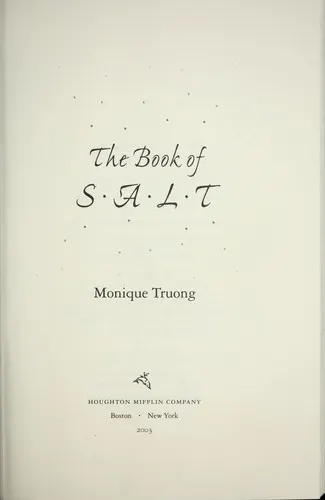
Books like The Book of Salt
In The Book of Salt, taste is never merely taste: every mouthful carries homesickness, class, desire, and the question of whose life history considers worth recording.
If you liked The Book of Salt, you’ll love these
Not lookalikes — kindred books. Each one shares something essential with The Book of Salt, and we tell you exactly what.
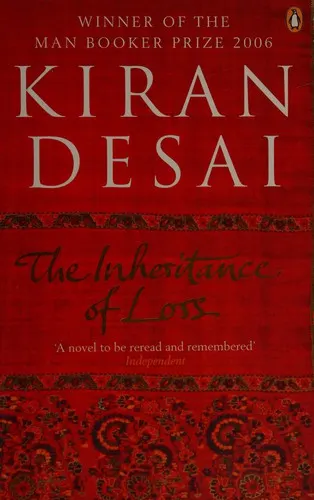
Desai’s Booker Prize–winning novel understands colonialism as an intimate inheritance: it lingers in accents, ambitions, shame, appetite, and the impulse to defer to certain kinds of people. In a crumbling Himalayan house, a retired judge, his granddaughter, and their cook inhabit radically different versions of the same unequal world, while the cook’s son pursues an increasingly precarious life in New York.
Like Truong, Desai can make food express everything its characters cannot say directly. Her comedy is sharp, her compassion unsentimental, and her shifts between privilege and servitude expose how global history enters private longing. The result is one of the finest novels about displacement—not as a journey between countries, but as the painful inability to feel fully at home anywhere.
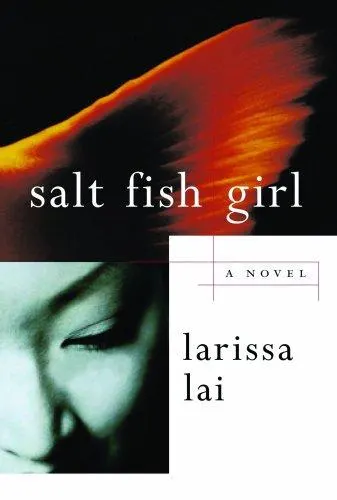
If you loved the bodily intelligence of Truong’s prose—its smells, textures, hungers, and erotic charge—Larissa Lai’s astonishing novel pushes those qualities into speculative fiction. Its intertwined narratives move between ancient myth and a corporate-controlled future, connected by queer desire, migration, memory, and the unmistakable scent of durian.
Lai refuses to separate history from the body: exploitation appears in genes and odors, while identity behaves less like a stable nationality than something inherited, manufactured, and transformed. Strange, sensuous, and formally daring, Salt Fish Girl is a foundational work of queer Asian Canadian speculative fiction. It does not resemble Truong’s Paris on the surface; beneath it, the same salt runs through both books.
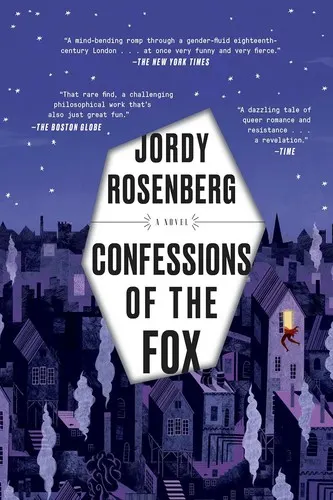
The Book of Salt takes figures relegated to the edge of a celebrated household and gives them a richer interior world than the people history placed at the center. Confessions of the Fox performs a similarly audacious reversal. A contemporary scholar discovers a manuscript recounting the life of the notorious eighteenth-century thief Jack Sheppard—here imagined as a trans man—and annotates it until his own story begins pressing against the margins.
Rosenberg makes the apparatus of scholarship part of the adventure: the footnotes are funny, desirous, argumentative, and increasingly urgent. Yet beneath the novel’s intellectual play is a passionate insistence that archives are shaped by power, and that queer lives survive through invention as well as evidence. Few historical novels are this learned, mischievous, politically alive, and genuinely romantic.