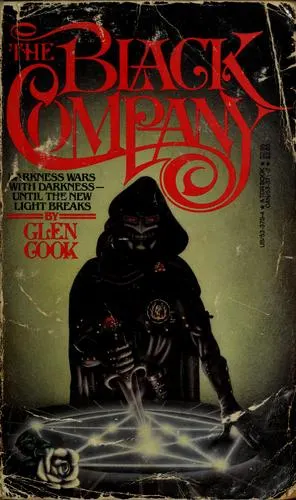
Books like The Black Company
James Salter’s Korean War cockpit may seem far from Cook’s sorcery, but it contains the same hard core: professionals measuring themselves against violence, comradeship, fear, and compromised ambition. The other two choices preserve Cook’s mistrustful chroniclers and ground-level view of terrible power.
If you liked The Black Company, you’ll love these
Not lookalikes — kindred books. Each one shares something essential with The Black Company, and we tell you exactly what.
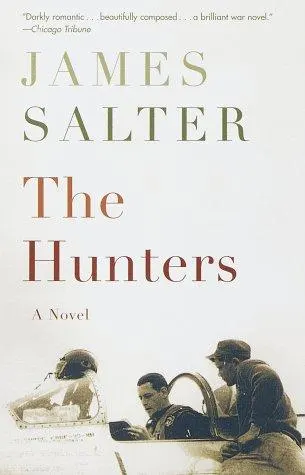
Cleve Connell arrives in Korea determined to prove himself as a fighter pilot, only to discover that combat is inseparable from rivalry, reputation, luck, and self-deception. Like Croaker, he belongs to a closed fraternity whose laconic codes conceal enormous emotional pressure.
Salter, himself a combat pilot, writes with ruthless economy. His aerial battles are lucid and frightening, but the novel’s real quarry is the warrior’s need to believe his service means something. Long admired as one of the finest novels of military aviation, The Hunters gives you The Black Company’s unsentimental fellowship without fantasy’s protective distance.
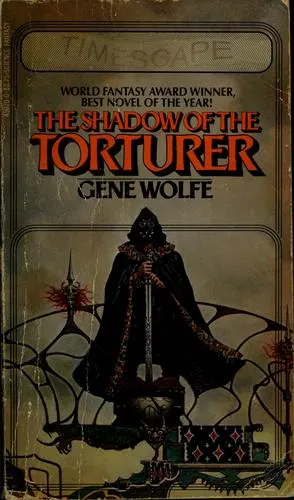
Severian, an apprentice in the guild of torturers, narrates his life while insisting that he forgets nothing. That claim immediately becomes a trap: his account is precise, dignified, selective, and riddled with blind spots. Anyone fascinated by Croaker as annalist—both preserving history and quietly shaping it—will find Severian irresistible.
Wolfe’s dying world is stranger and more ornate than Cook’s, yet both writers reveal their vast settings obliquely, through people who treat wonders as occupational facts. Winner of the World Fantasy Award and the opening volume of The Book of the New Sun, this is a novel readers spend decades rereading because every confident sentence may conceal another history beneath it.
Abercrombie compresses a war into three days around one strategically dubious hill. Generals maneuver reputations, officers improvise, and ordinary soldiers try to survive decisions made above their heads. The title’s irony is merciless: courage exists, but so do panic, vanity, bureaucracy, and accidental slaughter.
What makes it essential for a Black Company reader is the combination of gallows humor, shifting loyalties, and battlefield intimacy. Abercrombie repeatedly moves among combatants on opposing sides, making yesterday’s faceless enemy suddenly human without pretending anyone is innocent. This standalone First Law novel is modern grimdark at its sharpest: ferocious, funny, technically dazzling, and profoundly suspicious of every glorious story told about war.