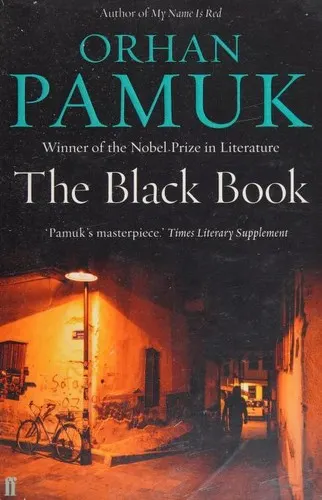
Books like The Black Book
Reading The Black Book feels like following a clue through a city only to discover that the streets, newspaper columns, old stories, and borrowed faces are all passages in the same unfathomable text. These three novels offer similarly intoxicating ways to get lost.
If you liked The Black Book, you’ll love these
Not lookalikes — kindred books. Each one shares something essential with The Black Book, and we tell you exactly what.
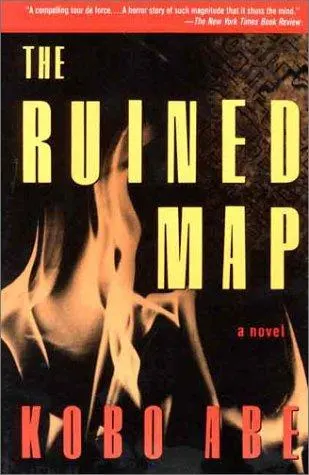
A detective is hired to find a missing man, but every apparent lead makes both the vanished husband and the detective’s own identity less stable. Abe turns detection inside out: the search does not restore order but exposes how fragile a self becomes when its familiar coordinates disappear.
The prose has Pamuk’s gift for making urban detail feel metaphysical. Streets, maps, matchboxes, photographs, and overheard remarks promise meaning while quietly undermining one another. Abe, one of the defining Japanese novelists of the postwar period, compresses the identity maze of The Black Book into a lean, unnerving anti-noir. It is the rare novel that can make getting lost feel like a form of revelation.
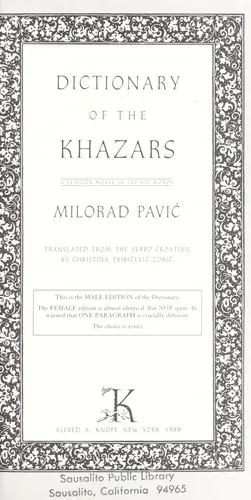
Pavić’s cult classic presents itself as three competing reference works—Christian, Islamic, and Jewish—about a vanished people. Entries echo, contradict, and complete one another, leaving the reader to construct a story from disputed dreams, names, objects, and legends.
What makes it a natural companion to The Black Book is not simply its puzzle-box form, but its belief that identity is made from stories told by rivals, inheritors, and impostors. Its scholarship continually turns into fantasy; its jokes conceal traps; no authority gets the final word. Few novels have given readers so much pleasurable freedom while making interpretation feel so dangerous. Once inside its lexicon, you become one of its authors.
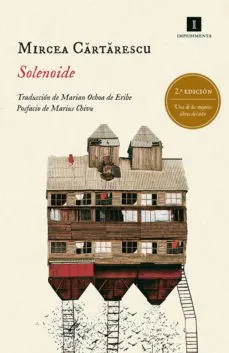
An unsuccessful writer becomes a schoolteacher in a Bucharest that steadily reveals impossible dimensions beneath its shabby surfaces. His notebooks gather childhood humiliations, grotesque classrooms, insects, dreams, conspiracies, and visions into an immense attempt to escape the limits of ordinary existence.
Like Pamuk, Cărtărescu lets obsessive digression become the real adventure: an anecdote opens into philosophy, architecture becomes anatomy, and the city takes on the private logic of the narrator’s mind. But Solenoid is more feverish and bodily, moving from comic misery to metaphysical awe without losing its intimate voice. Sean Cotter’s English translation won the 2024 Dublin Literary Award, confirming the stature its devoted readers already claimed for it. It is a colossal, hypnotic novel built for anyone who wants a city to become a cosmos.