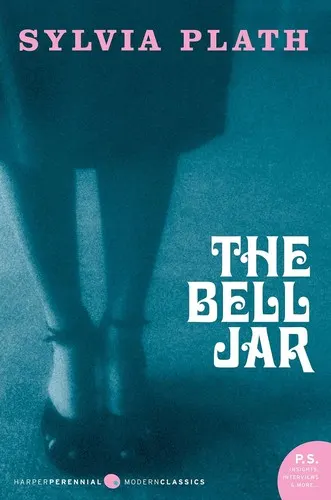
Books like The Bell Jar
The reader who loves The Bell Jar is drawn not just to its darkness, but to the unnerving combination of lucidity, fury, comedy, and immaculate control with which Esther Greenwood observes her own estrangement.
If you liked The Bell Jar, you’ll love these
Not lookalikes — kindred books. Each one shares something essential with The Bell Jar, and we tell you exactly what.

Sasha Jansen drifts through 1930s Paris with little money and fewer illusions, moving between hotel rooms, cafés, memories, and small social humiliations. Like Plath, Rhys makes alienation feel both intimate and architectural: the city, clothes, mirrors, and other people all seem to enforce a judgment the heroine has already internalized.
Rhys’s prose is sparer than Plath’s, but it has the same lethal precision and flashes of bitter comedy. Long neglected after its 1939 publication, Good Morning, Midnight is now regarded as one of Rhys’s masterpieces. Anyone captivated by Esther’s merciless intelligence should encounter Sasha, one of modern fiction’s most haunting voices.
Moshfegh’s unnamed narrator decides that the best response to life is to withdraw from it almost completely. What makes the novel kin to The Bell Jar is not simply this impulse toward disappearance, but the cold, funny intelligence narrating it: beauty, privilege, friendship, work, and consumer culture are examined with disgust so exact that it becomes exhilarating.
Moshfegh refuses to make her heroine conventionally likable or her pain prettily redemptive. The result is a savage comedy of self-erasure that has become a contemporary cult novel. Its audacity lies in letting a damaged young woman be vain, cruel, perceptive, ridiculous, and genuinely suffering all at once.
Martha knows something is wrong with her, but knowledge does not give her control over it—or a clean vocabulary for explaining it to the people she loves. Mason writes about mental illness through fractured family loyalties, marriage, memory, and the shame of being unable to perform an acceptable life.
The surprise is how funny the novel is. Its jokes arrive fast and dry, often at precisely the moments another writer would reach for uplift or solemnity. Shortlisted for the Women’s Prize, Sorrow and Bliss has earned devoted readers because it pairs emotional devastation with social sharpness and refuses a tidy cure. It offers the rare pleasure The Bell Jar does: being made to laugh by a voice that is telling the truth at considerable cost.