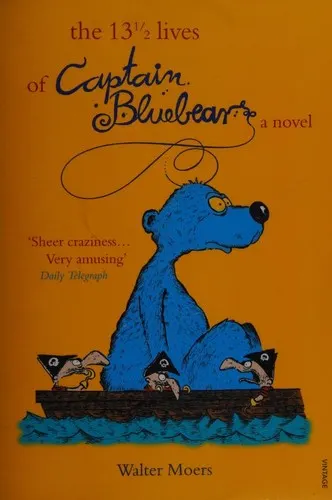
Books like The 13½ Lives of Captain Bluebear
The 13½ Lives of Captain Bluebear and The City of Dreaming Books are twin monuments to Walter Moers’s conviction that a story should contain enough invention for twenty ordinary novels.
If you liked The 13½ Lives of Captain Bluebear, you’ll love these
Not lookalikes — kindred books. Each one shares something essential with The 13½ Lives of Captain Bluebear, and we tell you exactly what.
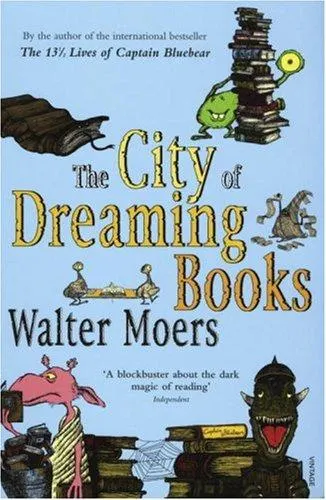
This is not merely another visit to Zamonia: it concentrates Moers’s gifts into a delirious love letter to books. Optimus Yarnspinner, a young author, arrives in Bookholm with a mysterious manuscript, entering a city of antiquarian shops, literary celebrities, ruthless critics and dangerous bibliophiles.
Bluebear readers will recognize the illustrated monsters, mock scholarship and digressions that keep mutating into stories of their own. But here Moers gives his exuberance a sharper target—the vanity, ecstasy and lunacy of literary culture. Bookholm feels inexhaustibly physical, down to its smells and obscure trades, while the jokes about writers and readers carry the affectionate accuracy of lifelong obsession. Often regarded by Zamonia devotees as one of Moers’s finest books, it is the rare follow-up that can make his imaginative world seem larger than it did the first time.
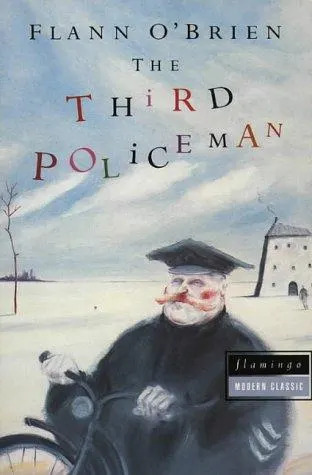
If your favorite Bluebear passages are those in which an absurd idea is explained with impeccable scholarly confidence, read The Third Policeman. Its unnamed narrator reveres de Selby, a crackpot philosopher whose theories—supported by increasingly elaborate footnotes—include magnificent misunderstandings of night, mirrors and ordinary existence.
O’Brien’s deadpan precision makes nonsense feel like a complete rival system of thought. Bicycles acquire metaphysical importance; policemen discuss impossible measurements as routine procedure; logical explanations open trapdoors beneath reality. The comedy is darker and more unnerving than Moers’s, but it produces the same addictive sensation that anything can happen provided it is described authoritatively enough. Rejected during O’Brien’s lifetime and published posthumously, it became a cult classic because there is still nothing else quite like its blend of slapstick, philosophy and lucid nightmare.
Moers’s enormous meals, impossible anatomies, runaway catalogues, invented authorities and heroic exaggerations belong to a tradition so strongly associated with Rabelais that “Rabelaisian” became the word for it. These Renaissance adventures of two giants turn education, warfare, law, religion and bodily functions into material for riotous invention.
The real kinship lies in narrative appetite. Rabelais cannot mention an object without imagining fifty variants, or make one joke when a page-long avalanche will do. Beneath the bawdiness is formidable learning and a liberating distrust of pompous certainty—the same mixture that makes Bluebear’s encyclopedia entries more than decorative silliness. In a vigorous modern translation, such as M. A. Screech’s, this does not feel like dutiful canon-reading; it feels like discovering the unruly ancestor of Moers’s entire comic universe.