Author
Books like Walter Moers
5 books we recommend to Walter Moers readers, drawn from The 13½ Lives of Captain Bluebear and The City of Dreaming Books — each with the reason why.
If you loved The 13½ Lives of Captain Bluebear
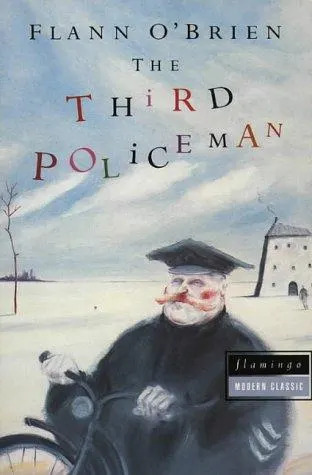
If your favorite Bluebear passages are those in which an absurd idea is explained with impeccable scholarly confidence, read The Third Policeman. Its unnamed narrator reveres de Selby, a crackpot philosopher whose theories—supported by increasingly elaborate footnotes—include magnificent misunderstandings of night, mirrors and ordinary existence.
O’Brien’s deadpan precision makes nonsense feel like a complete rival system of thought. Bicycles acquire metaphysical importance; policemen discuss impossible measurements as routine procedure; logical explanations open trapdoors beneath reality. The comedy is darker and more unnerving than Moers’s, but it produces the same addictive sensation that anything can happen provided it is described authoritatively enough. Rejected during O’Brien’s lifetime and published posthumously, it became a cult classic because there is still nothing else quite like its blend of slapstick, philosophy and lucid nightmare.
Moers’s enormous meals, impossible anatomies, runaway catalogues, invented authorities and heroic exaggerations belong to a tradition so strongly associated with Rabelais that “Rabelaisian” became the word for it. These Renaissance adventures of two giants turn education, warfare, law, religion and bodily functions into material for riotous invention.
The real kinship lies in narrative appetite. Rabelais cannot mention an object without imagining fifty variants, or make one joke when a page-long avalanche will do. Beneath the bawdiness is formidable learning and a liberating distrust of pompous certainty—the same mixture that makes Bluebear’s encyclopedia entries more than decorative silliness. In a vigorous modern translation, such as M. A. Screech’s, this does not feel like dutiful canon-reading; it feels like discovering the unruly ancestor of Moers’s entire comic universe.
If you loved The City of Dreaming Books
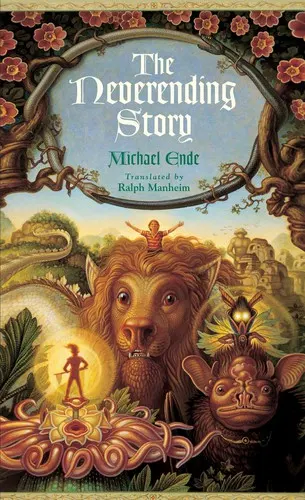
Like Moers, Ende understands that bibliophilia can be thrilling rather than merely cozy. Lonely Bastian steals a mysterious book, hides in his school attic, and begins reading about Fantastica, a realm being consumed by the Nothing. The physical act of reading soon feels charged with danger and consequence.
Ende combines grotesque creatures, melancholy, comedy, and philosophical depth without sanding away the strangeness. Its typographic play and nested storytelling make the book itself part of the enchantment. A modern fantasy classic with generations of devoted readers, it offers the same intoxicating conviction as Moers: books do not just describe worlds—they alter the people brave enough to enter them.
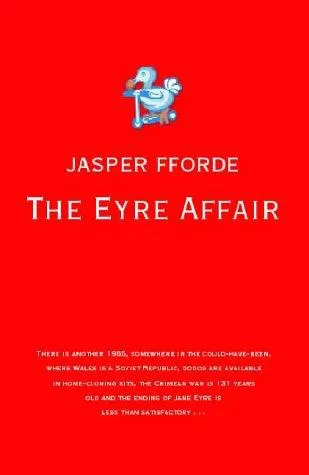
In Fforde’s alternate 1985, literary scholarship has the intensity of organized crime. Detective Thursday Next pursues a villain who has begun targeting treasured manuscripts, while ordinary citizens argue passionately about Shakespearean authorship and genetically reconstructed dodos wander through domestic life.
The kinship lies in the velocity of invention. Fforde piles puns, absurd institutions, genre collisions, and bookish in-jokes into a genuine adventure, much as Moers makes literary culture exuberantly physical. Yet beneath the cleverness is an infectious belief that stories matter enough to fight over. This long-running cult favorite launched the Thursday Next series; missing its opening volume means missing one of fantasy’s funniest love letters to reading.
For the reader who especially loved wandering through Bookholm’s accumulated legends, false authorities, and secret histories, Pavić offers a stranger expedition. His internationally acclaimed cult novel is arranged as three competing lexicons—Christian, Islamic, and Hebrew—whose entries circle the vanished Khazar civilization. You may read from beginning to end or follow names and references wherever they lead.
What initially resembles an eccentric reference book gradually reveals dream hunters, unreliable documents, recurring figures, and contradictions that feel less like flaws than hidden passages. Pavić turns scholarship into mythology and interpretation into adventure. Few novels make the reader so responsible for assembling the world; once opened, it becomes the sort of literary labyrinth Moers’s residents would risk their lives to possess.