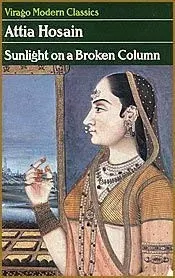
Books like Sunlight on a Broken Column
Khadija Mastur compresses history into a women’s courtyard; Amitav Ghosh sends it wandering across households, cities, and borders. Between them, Anita Desai finds Partition’s residue in the charged silences of one family home.
If you liked Sunlight on a Broken Column, you’ll love these
Not lookalikes — kindred books. Each one shares something essential with Sunlight on a Broken Column, and we tell you exactly what.
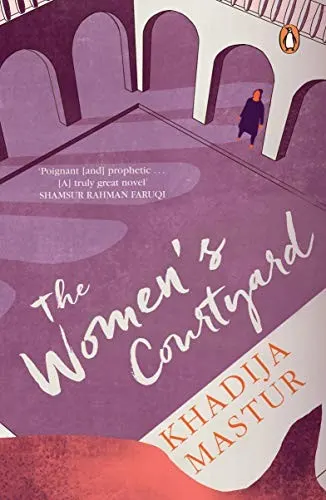
If Hosain’s great achievement is to show politics entering lives through marriage, gossip, confinement, and divided loyalties, Mastur makes that process almost unbearably immediate. In a Muslim household during the independence movement, young Aliya watches the courtyard become both a prison and a complete political world.
First published in Urdu as Aangan, this is now regarded as a classic of Urdu fiction. Mastur’s sharper, more claustrophobic style makes an illuminating counterpart to Hosain’s elegance: the women excluded from public life nevertheless see its hypocrisies with devastating clarity. Anyone moved by Laila’s struggle to think and choose amid familial pressure should not miss Aliya.

Desai begins not with history’s explosion but with what remains afterward: an old Delhi house, estranged siblings, grievances preserved with the tenacity of childhood memories. The novel understands, as Hosain does, that a family can embody an entire vanished social order without becoming a mere symbol of it.
Shortlisted for the Booker Prize, Clear Light of Day is among Desai’s most admired novels, and its emotional precision is extraordinary. Rooms, music, heat, and habitual cruelties accumulate until memory itself seems tangible. Readers who loved Hosain’s ability to mingle tenderness with unsparing judgment will find Desai’s final movement quietly overwhelming.
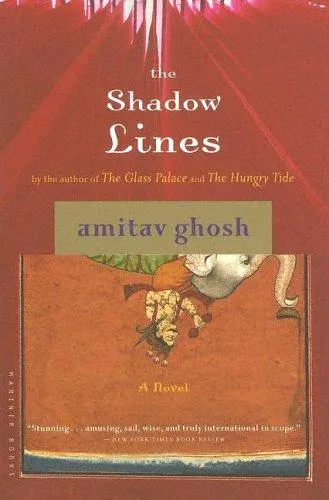
Ghosh takes one of the deepest intuitions in Sunlight on a Broken Column—that borders drawn on maps cut through intimate life—and builds an audacious novel around it. A young narrator reconstructs the stories of two interconnected families, discovering how imagination, memory, and political violence make distant places disturbingly close.
Winner of India’s Sahitya Akademi Award, The Shadow Lines has become one of the defining English-language novels about Partition’s long reach. Yet its power lies less in historical statement than in its restless intelligence: it changes how one thinks about belonging, nationalism, and the stories families tell. Hosain’s readers will recognize the same refusal to separate private love from public history, rendered here with exhilarating formal daring.