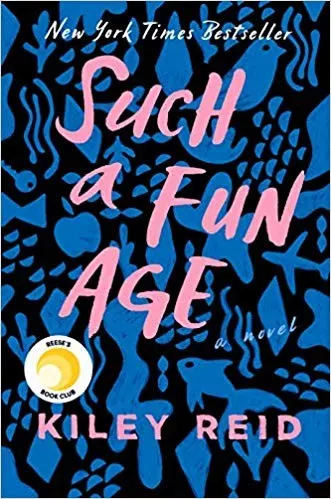
Books like Such a Fun Age
Bright, funny unease hangs over these books: every polished conversation conceals a power struggle, every good intention risks becoming self-serving, and the sharpest jokes leave a bruise.
If you liked Such a Fun Age, you’ll love these
Not lookalikes — kindred books. Each one shares something essential with Such a Fun Age, and we tell you exactly what.
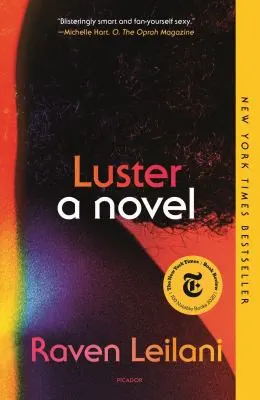
Like Emira, Edie is a young Black woman surrounded by people who mistake access to her life for intimacy. Underpaid, artistically frustrated, and sleeping with an older white man in an open marriage, she observes everyone—including herself—with merciless precision.
Leilani shares Reid’s gift for making racial and economic power visible in awkward meals, workplace exchanges, and supposedly generous gestures. But Luster is wilder and more lyrical, powered by Edie’s appetite, anger, and refusal to become an uncomplicated victim. Winner of the Kirkus Prize, it is one of those debuts whose sentences readers immediately start underlining.
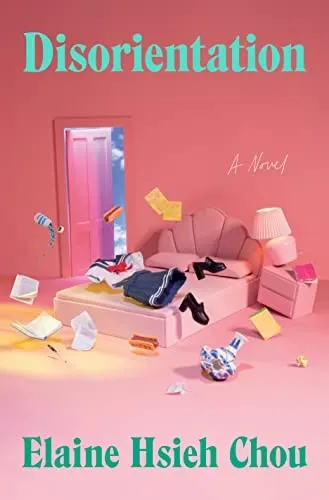
Ingrid Yang has spent years writing a dissertation about a celebrated Chinese American poet she no longer cares about. A strange discovery in the archives draws her into an increasingly outrageous academic mystery—and exposes how eagerly universities turn identity, allyship, and grievance into institutional currency.
Where Such a Fun Age catches liberal hypocrisy in intimate relationships, Disorientation lets it run rampant across an entire campus. Chou is fearless about compromised motives: nobody’s politics remain pristine once status, desire, and careerism enter the room. The escalating farce is delicious, but its argument about who gets to package another person’s identity lands with real force.
Jane, a biracial novelist with a stalled career and precarious finances, is housesitting an enviably successful friend’s Los Angeles home when she gets a chance to reinvent herself as a television writer. Soon, artistic integrity, racial authenticity, and basic solvency are becoming difficult to tell apart.
Senna has been anatomizing America’s racial categories since her landmark debut Caucasia, and here her satire is exceptionally nimble. She understands, as Reid does, that money rarely announces itself as power; it appears as taste, helpful advice, a beautiful kitchen, or an opportunity too flattering to question. Colored Television is both savagely funny and painfully alert to the bargains people make when they want security, recognition, and a nicer life.