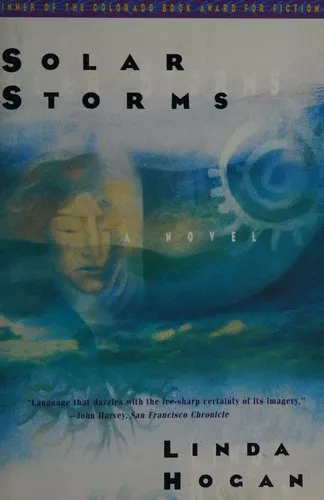
Books like Solar Storms
After Solar Storms, ordinary realism can feel too small: you want stories in which land remembers, ancestral voices alter the present, and resistance grows from belonging rather than rhetoric.
If you liked Solar Storms, you’ll love these
Not lookalikes — kindred books. Each one shares something essential with Solar Storms, and we tell you exactly what.
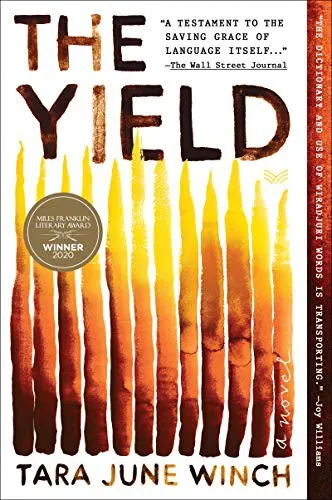
August Gondiwindi returns to Australia after her grandfather’s death, while his handwritten dictionary of Wiradjuri words preserves a world that colonial history has tried to erase. Like Solar Storms, The Yield understands homecoming as an encounter with inherited wounds—and language as a living bond among family, land, and memory.
Winch’s three interwoven voices make the novel formally beautiful as well as politically urgent: intimate grief expands into a struggle over who may name, own, and narrate a place. Winner of Australia’s Miles Franklin Award, it is one of the essential Indigenous novels of recent years, and its final effect is both devastating and restorative.
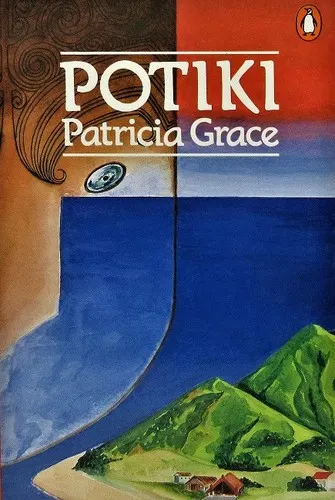
On a Māori family’s coastal land, daily life, carving, storytelling, cultivation, and ceremony form one inseparable whole. When developers begin pressing the community to surrender the land, Grace shows resistance arising not from abstract principle but from generations of attention and care.
What will feel deeply familiar is the novel’s refusal to separate human consciousness from the natural or ancestral worlds. Yet Potiki has its own compact, luminous power: communal voices circle through time, and a carved meeting house seems to hold history within its body. A landmark of Māori fiction and a New Zealand Book Award winner, it accomplishes in a short span what many epics cannot.
If the visionary scale of Solar Storms was what seized you, Carpentaria is the book not to miss. Set in Aboriginal country around Australia’s Gulf of Carpentaria, it opens onto feuds, dreams, ancestral law, cyclone weather, and the disruptive power of a mine—but Wright’s real subject is a reality too vast to fit inside colonial maps or conventional narrative.
Her sentences can be torrential, comic, furious, and incantatory. Landscape is not scenery here; it thinks, acts, and carries stories beyond any individual life. The Miles Franklin–winning novel has earned fierce admiration for its audacity, and reading it feels less like observing a world than being caught inside its weather.