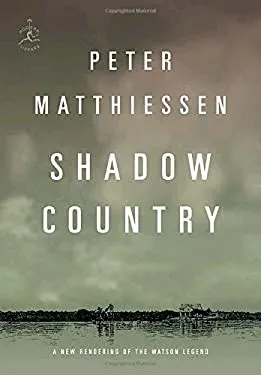
Books like Shadow Country
How does a violent man become a legend—and can those who inherit his story ever separate his crimes from their own need to explain him? These novels share Shadow Country’s distrust of settled history, its moral gravity, and its power to make an entire society speak through one contested life.
If you liked Shadow Country, you’ll love these
Not lookalikes — kindred books. Each one shares something essential with Shadow Country, and we tell you exactly what.
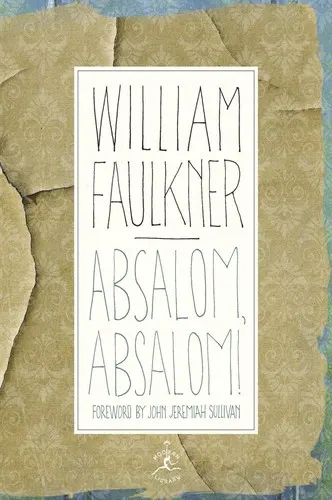
No novel is more closely related to Shadow Country in its deepest design. Thomas Sutpen, like E. J. Watson, is a ruthless, magnetic patriarch reconstructed through rumor, memory, grievance, and speculation. The facts keep changing with the teller, until the effort to understand one man becomes an inquiry into a whole region’s racial violence and self-deceiving mythology.
Faulkner’s long, incantatory sentences demand attention, but they produce the same engulfing effect as Matthiessen’s accumulation of testimony: you do not simply learn what happened; you feel history being distorted as it passes from mouth to mouth. Often called one of Faulkner’s supreme achievements, it is essential for anyone stirred by Shadow Country’s fusion of family tragedy, regional epic, and moral investigation.
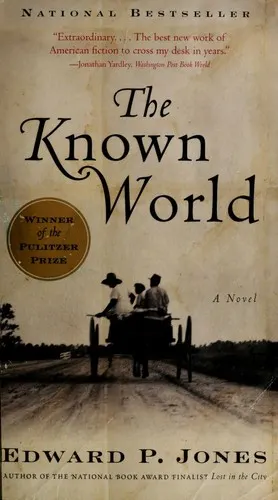
Jones begins with the death of Henry Townsend, a Black slaveholder in antebellum Virginia, then moves freely through the lives entangled in his estate. Its kinship with Shadow Country lies not merely in historical violence but in the extraordinary way both novels enlarge outward: every servant, neighbor, relative, and adversary possesses an independent moral reality, and seemingly minor lives open into complete destinies.
The Pulitzer Prize-winning novel has the authority of recovered history without pretending that history is orderly. Jones’s calm, omniscient voice can disclose the future in a sentence or pause over one private betrayal, making the entire community feel simultaneously intimate and immense. If Matthiessen’s crowded Everglades world left you wanting another novel where landscape, law, commerce, race, and family form one tragic system, The Known World is indispensable.
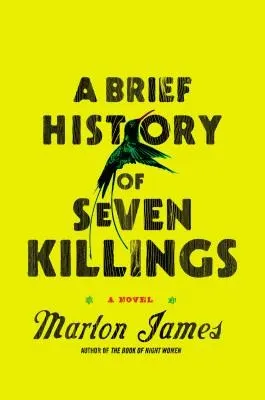
Marlon James turns a 1976 attempt on Bob Marley’s life into a roaring polyphonic novel spoken by gang members, politicians, CIA operatives, journalists, women caught in violent households, and even the dead. As in Shadow Country, a famous man occupies the story’s center while remaining partly unknowable; the real subject is the multitude of people who create, exploit, fear, and survive the legend around him.
Winner of the Booker Prize, the novel is celebrated for good reason: its voices are fiercely distinct, its violence has political and psychological weight, and its slang-rich momentum makes history feel dangerously alive. James offers none of the safety of an official account. He makes you inhabit the competing stories from which power is manufactured—an experience admirers of Matthiessen’s vast chorus should not miss.