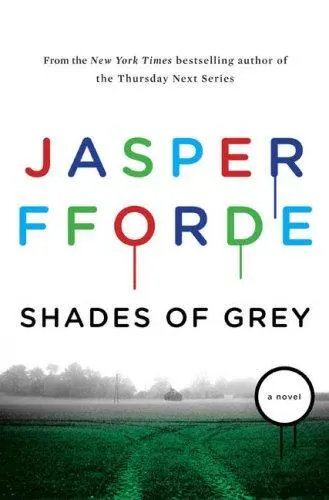
Books like Shades of Grey
The great trick of Shades of Grey is that its daftest regulations are also its most frightening: every joke about etiquette or loopholes reveals how thoroughly nonsense can become normal. These three novels share that blend of ingenious rules, comic momentum, and gathering unease.
If you liked Shades of Grey, you’ll love these
Not lookalikes — kindred books. Each one shares something essential with Shades of Grey, and we tell you exactly what.
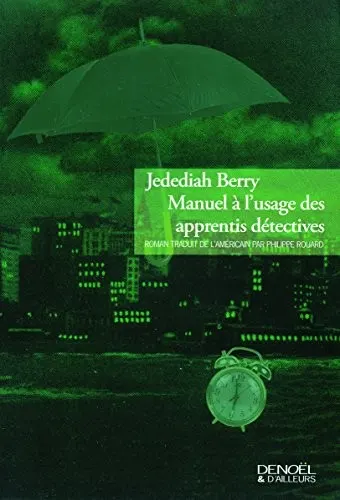
Charles Unwin is a meticulous clerk at a detective agency, content to catalogue another man’s adventures—until his celebrated detective disappears and Unwin is abruptly promoted into the field. From there, office procedure collides with dream logic, impossible crimes, and a city whose institutions seem to operate by rules no one has fully explained.
Like Fforde, Berry makes bureaucracy both hilarious and ominous. Unwin’s faith in filing systems resembles Eddie Russett’s initial faith in Chromatic order: each absurd regulation promises stability while quietly concealing something stranger. Winner of the Dashiell Hammett Prize, this is a wonderfully controlled cult mystery—less antic than Fforde, but equally skilled at making an invented system feel inevitable, ridiculous, and dangerous.

On an island devoted to the author of a famous pangram, letters begin falling from a revered monument. The government interprets each fallen tile as a divine command to ban that letter from speech and writing—and citizens must somehow obey.
The premise is funny; Dunn’s execution makes it exhilarating. Because the novel is composed of letters between islanders, its own vocabulary contracts as the prohibitions accumulate. Language becomes contraband, ingenuity becomes resistance, and petty officialdom acquires real teeth. Readers who delighted in Fforde’s punishable spoons, compulsory queuing, and social rules treated as natural law will recognize the same lethal escalation from silliness to tyranny. Few novels turn a formal game into such an affecting defense of thought, friendship, and disobedience.
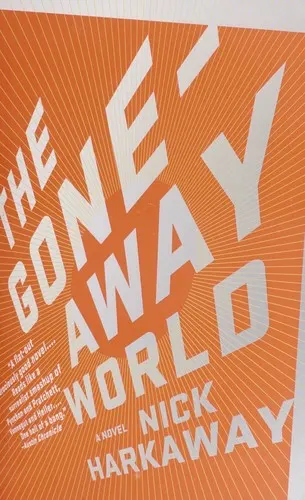
A fire on the enormous Jorgmund Pipe sends a former special-operations crew racing across a damaged world with an outrageously dangerous cargo. That opening barely prepares you for Harkaway’s combination of martial-arts digressions, corporate absurdity, improvised communities, friendship, horror, and philosophical slapstick.
What connects this Arthur C. Clarke Award–shortlisted debut to Shades of Grey is its generosity of invention. Harkaway does not merely construct a bizarre future; he keeps asking what kind of people its institutions produce, and how loyalty and decency survive inside systems built from euphemism and bad logic. The novel is wilder and more maximalist than Fforde, but it has the same rare ability to make you laugh at an absurd world just before revealing the emotional and moral cost of living there.