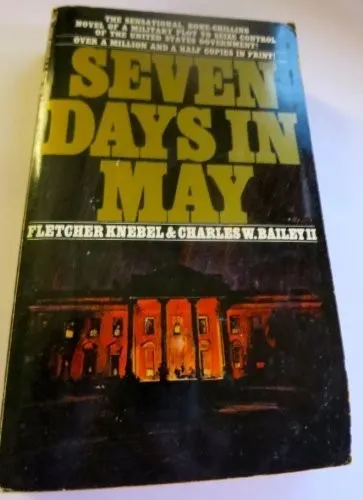
Books like Seven Days in May
Behind a guarded door, one conscientious person studies a document while the machinery of state begins to move in the wrong direction. These three novels turn that moment of recognition into exceptional suspense, making institutions feel both terrifyingly powerful and desperately dependent on individual nerve.
If you liked Seven Days in May, you’ll love these
Not lookalikes — kindred books. Each one shares something essential with Seven Days in May, and we tell you exactly what.
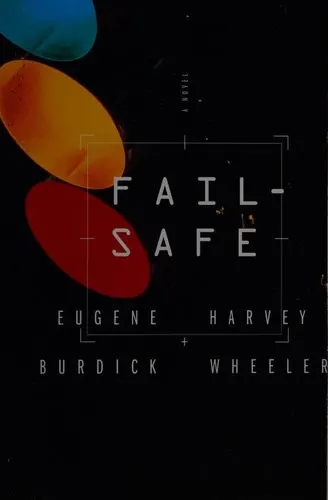
A technical error sends American bombers toward the Soviet Union, and the people inside the command system must confront a machine that obeys perfectly after human judgment has failed. Like Seven Days in May, Fail-Safe understands that the most frightening crises are conducted through clipped conversations, procedural language, and decisions made by responsible men with almost no room left to act.
Its suspense comes from moral pressure rather than spectacle: every possible remedy carries an appalling cost. The lean novel became a defining Cold War thriller and inspired Sidney Lumet’s equally austere film. Few books so powerfully dramatize the terrible dignity—and vulnerability—of constitutional command.
Forsyth reveals the central plot almost immediately: a professional assassin has been hired to kill Charles de Gaulle. The marvel is what follows. He builds suspense from forged papers, timetables, bureaucratic fragments, and two opposing chains of highly competent people working with incomplete information.
That documentary exactness will delight anyone who admired how Seven Days in May converts staff work and institutional procedure into a tightening noose. Winner of the Edgar Award for Best Novel, The Day of the Jackal became a model for the modern procedural thriller. It proves that painstaking detail, arranged by a master, can be more exciting than any cascade of twists.
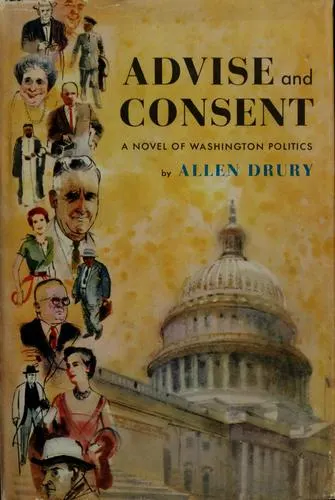
Here the battlefield is the United States Senate, where a controversial nomination for secretary of state exposes rival ambitions, private vulnerabilities, and incompatible ideas of public duty. Drury treats parliamentary procedure not as background but as action: a hearing, a vote, or a strategic silence can strike with the force of violence.
The kinship with Seven Days in May lies in its conviction that democracy survives through fallible people operating under immense pressure—not through abstract safeguards alone. Its large cast gives political conflict unusual human weight, while its intimate knowledge of Washington makes every maneuver convincing. The novel won the Pulitzer Prize and remains one of the essential fictional portraits of American government testing its own principles.