Books like Praiseworthy
After Wright’s vast, unruly vision, ordinary realism can feel starved of air; the next book needs language with weather in it, comedy fierce enough for catastrophe, and a sense of time larger than the colonial present.
If you liked Praiseworthy, you’ll love these
Not lookalikes — kindred books. Each one shares something essential with Praiseworthy, and we tell you exactly what.
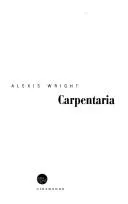
Wright’s earlier epic is not merely a rehearsal for Praiseworthy but its indispensable companion. In the Gulf town of Desperance, ancestral law, mining interests, family conflict and settler absurdity coexist without being flattened into a conventional realist hierarchy. The narration moves like oral storytelling magnified to continental scale: comic, incantatory, argumentative and alive to presences that official history cannot perceive.
Winner of the Miles Franklin Award, Carpentaria established Wright as one of Australia’s essential novelists. Its particular marvel is the authority with which it makes Indigenous knowledge the governing reality rather than explanatory material for outsiders. Anyone exhilarated by Praiseworthy’s sovereign imagination should not miss the novel in which Wright first demonstrated just how radically a book could rearrange the world around its readers.
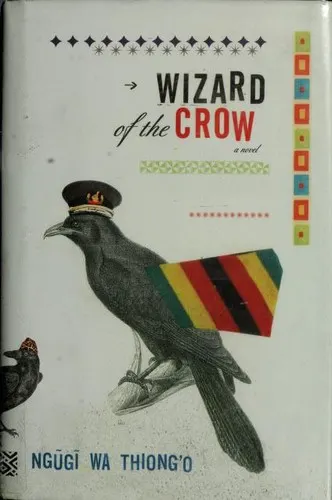
In the fictional dictatorship of Aburĩria, a ruler’s vanity inspires a proposed tower reaching heaven, while queues, rumours and petty bureaucracies swell into national delirium. Ngũgĩ turns authoritarian power into grotesque theatre, but the laughter never makes the violence harmless. Like Wright, he understands that colonial modernity often becomes most truthful on the page when rendered as absurdity, myth and verbal excess.
Written first in Gĩkũyũ and translated by Ngũgĩ himself, Wizard of the Crow is widely regarded as his late-career masterpiece. Its storytelling has the improvisatory momentum of a tale repeatedly passed from mouth to mouth, gathering jokes, contradictions and acts of resistance as it travels. Praiseworthy readers will recognize a rare kind of abundance here: satire not as clever commentary, but as an entire people’s counter-language to power.
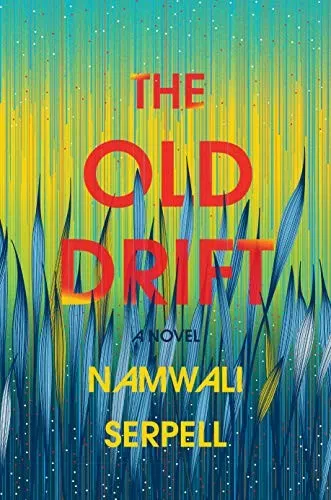
The Old Drift begins near Victoria Falls and expands into a multigenerational Zambian saga in which colonial accident, intimate obsession, technological fantasy and ecological unease continually alter one another. Serpell changes modes with startling confidence—historical fiction, family chronicle, speculative invention—while a choral presence of mosquitoes gives the novel its sly, nonhuman perspective.
That restlessness is the real kinship with Praiseworthy. Both novels reject the idea that political reality can be captured from one viewpoint or in one genre; both let insects, weather, bodies, machines and inherited stories speak across human plans. Serpell’s debut won the Arthur C. Clarke Award, an unusual distinction for a novel so resistant to classification. It offers the intoxicating experience of watching a writer enlarge the novel until history and the future can occupy the same sentence.