Books like Parva
Reading Parva feels like watching inherited grandeur fall away until only bodies, appetites, loyalties and irreconcilable memories remain. Its heroes become witnesses under questioning, and dharma becomes something painfully argued rather than reverently received.
If you liked Parva, you’ll love these
Not lookalikes — kindred books. Each one shares something essential with Parva, and we tell you exactly what.
This Malayalam classic makes Bhima—physically indispensable, emotionally neglected and habitually underestimated—the consciousness through which the Mahabharata is reconsidered. Like Bhyrappa, M. T. replaces divine machinery with motive, political calculation and the accumulated injuries inside a family.
Where Parva gains power from competing voices, Bhima gains it from one partial, wounded voice: the brother always assigned the “second turn.” The Vayalar Award-winning novel is among M. T.’s most beloved works, and its intimate severity makes it perhaps the essential companion to Parva.
Sawant enters the epic through Karna, then refuses to let even Karna possess the whole truth. Voices including those of Kunti, Duryodhana and the people closest to him reshape the same life from incompatible angles. That polyphonic design will be immediately thrilling to a reader who loved Parva’s sense that character is made from testimony, grievance and self-justification.
Mrityunjaya is more openly lyrical and heroic than Bhyrappa’s austere novel, but it is equally serious about caste, legitimacy, friendship and the terrible cost of being loyal to one’s chosen identity. A modern Marathi classic and recipient of the Moortidevi Award, it has inspired unusually devoted readers because it makes Karna’s moral predicament feel not merely tragic but personally inescapable.
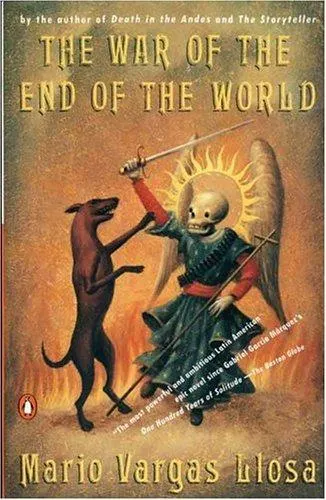
Vargas Llosa’s great novel begins with a wandering preacher drawing Brazil’s dispossessed toward the settlement of Canudos. From there, certainty fractures among believers, landowners, soldiers, bandits, politicians and observers—each convinced that history means something different.
Its kinship with Parva lies deeper than epic scale. Both novels dismantle the clean rhetoric surrounding war and reconstruct catastrophe from hunger, charisma, rumor, humiliation and ideology. Vargas Llosa’s shifting perspectives make entire populations intelligible without declaring any one of them innocent. Widely regarded as one of his masterworks, it offers the rare experience Parva provides: history becoming epic precisely because everyone in it remains frighteningly human.