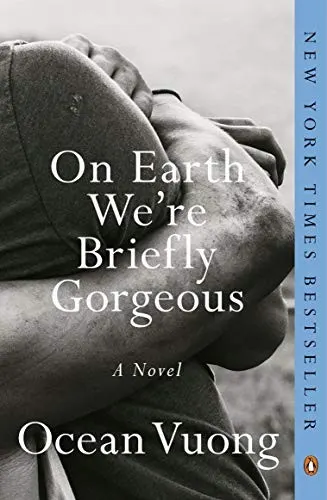
Books like On Earth We're Briefly Gorgeous
Its sentences keep changing in memory: what first felt like beauty later reveals anger, what felt like grief becomes an act of love. These novels likewise make language carry desire, family history, shame, and survival without simplifying any of them.
If you liked On Earth We're Briefly Gorgeous, you’ll love these
Not lookalikes — kindred books. Each one shares something essential with On Earth We're Briefly Gorgeous, and we tell you exactly what.
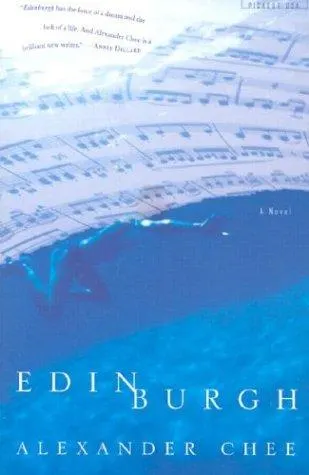
Chee’s cult-classic debut shares Vuong’s rare ability to write about trauma without surrendering a character’s life to it. Its narrator, a Korean American boy singing in a choir, looks back on formative violence through the unstable workings of memory: what the body retains, what art transforms, and what beauty cannot redeem.
The prose is exquisitely controlled—lyrical, but never decorative—and Chee treats queer desire with the same mixture of danger, tenderness, and self-discovery that electrifies Vuong’s novel. Edinburgh has earned fierce devotion because it offers neither easy healing nor despair; it shows a self being made from damaged materials. For many readers, it is not simply admired but carried.
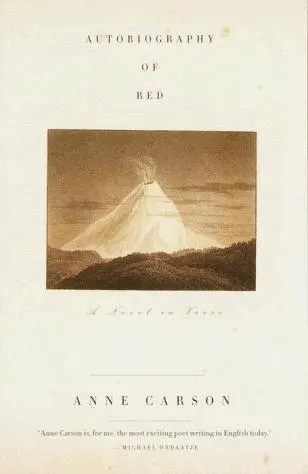
If what you loved most was Vuong’s refusal to choose between poetry and fiction, read Carson’s astonishing verse novel. She recasts the monster Geryon as a shy, red-winged boy who becomes a photographer and falls painfully in love with Herakles. From that audacious premise, she creates something intimate, funny, erotic, and emotionally exact.
A modern classic with an influence far beyond poetry, Autobiography of Red understands that queer longing can alter one’s sense of time, body, and reality. Carson’s images possess the same afterlife as Vuong’s best lines: they seem impossible until you read them, then inevitable forever afterward.
Greenwell begins with an encounter between an American teacher and Mitko, a young Bulgarian man, then follows the desire, bargaining, projection, and loneliness that gather around their connection. The novel’s true subject is not the affair’s circumstances but the morally complicated hunger to be known through another body.
Greenwell’s long, searching sentences move with extraordinary psychological precision, exposing how lust can contain tenderness, power, shame, and self-deception all at once. Widely acclaimed as a landmark of contemporary queer fiction, What Belongs to You offers the same unnerving intimacy as Vuong: the sensation that confession is becoming art in front of you, and that beauty is telling a truth the speaker can barely endure.