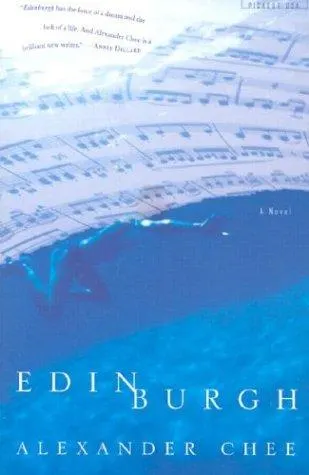
Books like Edinburgh
Anne Carson turns pain into myth; Édouard Louis submits it to cross-examination. Along with Arundhati Roy, they share Alexander Chee’s conviction that beauty can reveal trauma without making it beautiful.
If you liked Edinburgh, you’ll love these
Not lookalikes — kindred books. Each one shares something essential with Edinburgh, and we tell you exactly what.
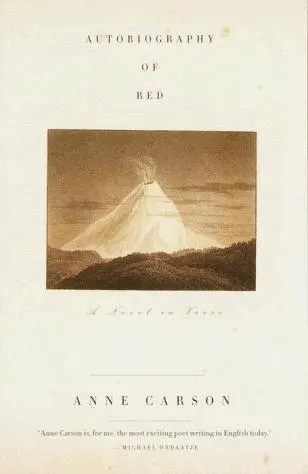
Carson’s cult classic is a verse novel about Geryon, a red-winged monster recast as a queer boy who falls disastrously in love with Herakles. Like Edinburgh, it uses an ancient story not as decoration but as a private language for experiences that ordinary realism cannot contain.
Its fragments, photographs, silences, and startling images make adolescence feel both legendary and painfully immediate. Carson understands, as Chee does, that art can be a refuge, a disguise, and eventually a means of self-creation. Few books capture so precisely the lonely grandeur of becoming yourself after someone else has taught you shame.

After a violent encounter, Édouard hears his sister recount his experience to her husband—and discovers that his story changes when another person tells it. Louis builds the novel from repetitions, contradictions, omissions, and acts of interpretation, asking who owns trauma once it has entered language.
That makes it an essential companion to Edinburgh, whose deepest drama lies not only in what happened to Fee but in how memory rearranges a life around it. Louis is colder and more forensic than Chee, yet equally alert to desire’s entanglement with fear and power. The result is brief, relentless, and formally ingenious: a book that refuses the comforting fiction that testimony is ever simple.
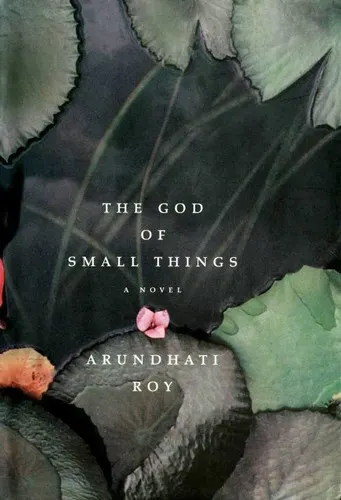
Roy’s Booker Prize–winning novel moves through time the way traumatic memory does: circling, foreshadowing, returning to charged images until their meanings become unbearable. At its center are twins learning how adult cruelty, forbidden love, and social power can invade childhood and alter the grammar of an entire life.
A reader who loved Chee’s sensuous, musical prose will recognize Roy’s faith in language as more than a vehicle for plot. Words split, echo, acquire secret meanings; beauty becomes a way of registering damage with exactness. The novel’s enormous reputation is deserved not merely because it is lush or tragic, but because its structure makes consequence palpable. Once its images enter your mind, they stay there.