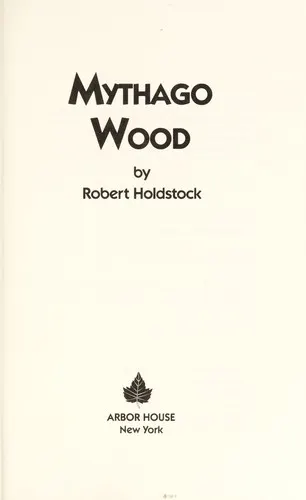
Books like Mythago Wood
You responded to the way Holdstock makes myth feel not inherited but alive: something grown from landscape, memory, desire, and fear. These three novels pursue that same dangerous intimacy by strikingly different paths.
If you liked Mythago Wood, you’ll love these
Not lookalikes — kindred books. Each one shares something essential with Mythago Wood, and we tell you exactly what.
Three friends carry the consequences of an occult experiment they performed years ago, while an imagined realm called the Pleroma seems to hover just beyond ordinary life. Harrison is interested less in magical spectacle than in what longing for transcendence does to people: how it infects love, memory, illness, and regret.
Like Mythago Wood, this is fantasy as psychological excavation. The supernatural may be revelation, self-deception, or both, and Harrison’s compressed, luminous prose makes that uncertainty hurt. Long cherished by writers and connoisseurs of literary fantasy, it is one of the genre’s great novels of failed enchantment—and its melancholy afterimage is hard to escape.
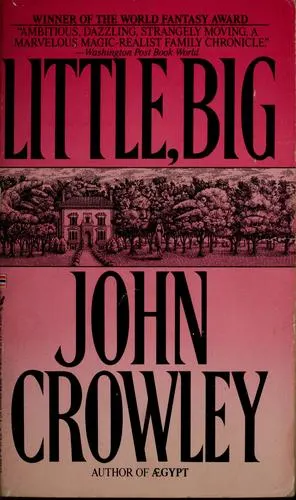
Smoky Barnable walks to the strange country house of Edgewood to marry Daily Alice, entering a family whose history is entangled with a half-glimpsed fairy world. From there, Crowley constructs a multigenerational story in which architecture, weather, storytelling, and family lore become parts of an immense hidden design.
Where Holdstock sends his characters deeper into a wood, Crowley takes his readers deeper into a family. Both novels understand that myth works by repetition and variation, and that wonder can be inseparable from loss. Winner of the World Fantasy Award and now firmly established as a modern fantasy classic, Little, Big inspires unusual devotion because it seems larger on every rereading—exactly like Edgewood itself.
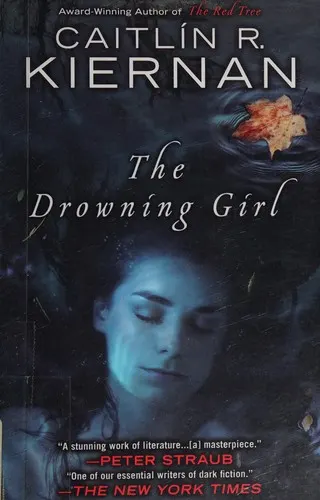
India Morgan Phelps, an artist living with schizophrenia, is trying to write a truthful account of meeting a mysterious woman named Eva Canning. The trouble is that Imp remembers more than one version of what happened, and each version draws upon mermaids, wolves, paintings, folklore, and private terror.
This is the closest match to Mythago Wood’s deepest question: do archetypes exist outside us, or do obsession and memory give them flesh? Kiernan turns unreliable narration into an instrument of genuine dread, yet Imp’s intelligence and vulnerability keep the novel emotionally immediate. Winner of both the Bram Stoker and James Tiptree Jr. awards, it is a haunting demonstration that myth need not be ancient to become inescapable.