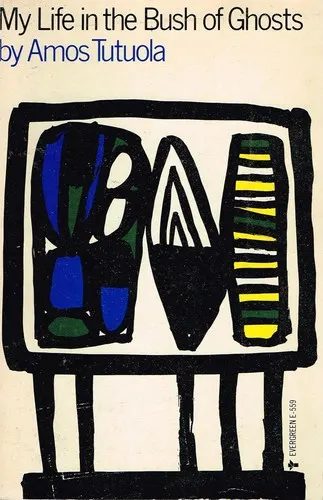
Books like My Life in the Bush of Ghosts
What laws can possibly hold once a traveler has crossed beyond the human world? These novels answer with the same exhilarating confidence in metamorphosis, oral storytelling, comic terror, and realities that refuse to stay separate.
If you liked My Life in the Bush of Ghosts, you’ll love these
Not lookalikes — kindred books. Each one shares something essential with My Life in the Bush of Ghosts, and we tell you exactly what.
This is one of the great literary headwaters of Tutuola’s work. First published in Yoruba in 1938 and translated by Wole Soyinka, Fagunwa’s pioneering novel sends the hunter Akara-ogun into a forest where every encounter tests not only his courage but his ability to understand what kind of being—or moral force—stands before him.
Like Tutuola, Fagunwa builds by accumulation: monsters, proverbs, songs, boasts, digressions, abrupt transformations. The narration retains the urgency of a storyteller performing before listeners, while Soyinka’s ceremonious translation gives the marvels a different but equally forceful music. Reading it reveals the larger Yoruba literary tradition behind Tutuola without diminishing his originality. Anyone captivated by the Bush of Ghosts should experience this foundational forest of impossible beings.
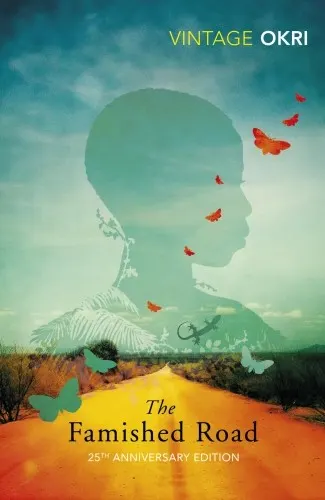
Azaro is an abiku, a spirit child who chooses the difficult world of the living even though spirits keep calling him back. From that premise, Ben Okri creates a neighborhood where political thugs, market women, ancestors, grotesque apparitions, and ordinary poverty occupy the same field of vision.
The kinship with Tutuola lies in this refusal to rank the supernatural as less real than hunger, family, or violence. Yet Okri’s prose is more lush and incantatory, turning repeated journeys through streets and forests into a vast meditation on endurance. The novel won the Booker Prize in 1991, but its lasting power comes from something prizes cannot confer: it makes perception itself feel unstable and inexhaustible. Its world is arduous, excessive, and alive on every page.
Carrington offers the comic, rebellious side of Tutuola’s strangeness. Her ninety-two-year-old heroine, Marian Leatherby, receives a hearing trumpet and discovers that her family intends to send her to an institution populated by eccentric elderly women and dominated by an ominous portrait. From there, ordinary logic begins to lose its authority.
Carrington reports impossibility with magnificent deadpan calm. Like Tutuola, she never pauses to make the marvelous respectable: institutions become occult puzzles, identities loosen, and each bizarre revelation simply opens the door to another. The result is less folkloric than My Life in the Bush of Ghosts but just as fearless about allowing comedy, menace, and metamorphosis to coexist. Long cherished as a surrealist cult classic, The Hearing Trumpet is the rare novel whose freedom can make conventional fiction seem unnecessarily timid.