Books like Morning and Evening
In Morning and Evening, a cup, a boat, or a familiar name can bear the weight of an entire life, while death arrives first as a subtle change in the rhythm of the world.
If you liked Morning and Evening, you’ll love these
Not lookalikes — kindred books. Each one shares something essential with Morning and Evening, and we tell you exactly what.

Mattis lives with his sister Hege and experiences ordinary things—a bird’s flight, a sound across water, a few exchanged words—as messages of immense and uncertain significance. Vesaas never patronizes him or explains away his perceptions; instead, the novel grants them a grave, crystalline reality.
Like Fosse, Vesaas makes simple language feel bottomless. Repetition becomes incantation, silences carry more than speech, and the natural world seems to hover between physical fact and revelation. The Birds is revered as a masterpiece of Norwegian fiction because its radical tenderness cannot be reduced to either realism or allegory. If Morning and Evening made you feel that consciousness itself is mysterious, this book is indispensable.
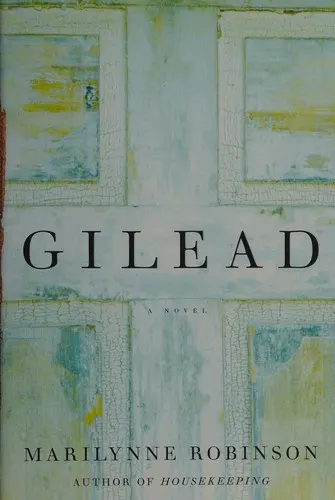
An elderly minister, knowing he will not see his young son grow up, writes him a long letter. That premise could produce solemn wisdom; Robinson instead fills the letter with remembered quarrels, private shame, sunlight, water, jokes, and the almost unbearable beauty of commonplace moments.
A reader of Fosse will recognize the sacramental attention: the sense that the eternal is not elsewhere but concealed inside gestures repeated every day. Robinson’s sentences are more expansive than Fosse’s, yet they have a similar tidal motion, circling memories until their spiritual meaning quietly appears. The Pulitzer Prize helped establish Gilead as a modern American classic, but its deepest distinction is intimacy: by the end, one man’s farewell feels like a blessing addressed directly to the reader.
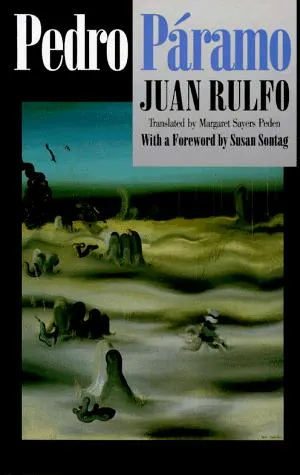
Juan Preciado travels to the town of Comala to find the father he has never known, fulfilling his mother’s dying request. Almost immediately, heat, dust, memory, and disembodied conversation make the town feel less like a stable place than a consciousness through which many lives are passing.
Rulfo shares Fosse’s ability to make the border between presence and absence seem permeable without turning mystery into a puzzle. His brief scenes and recurring voices accumulate musically; what first feels fragmentary gradually acquires the inevitability of ritual. This tiny novel transformed Spanish-language fiction and famously enlarged García Márquez’s sense of what a novel could be. It is scarcely longer than Morning and Evening, yet it contains a whole haunted world—and, like Fosse’s book, seems stranger and more complete each time it is reread.