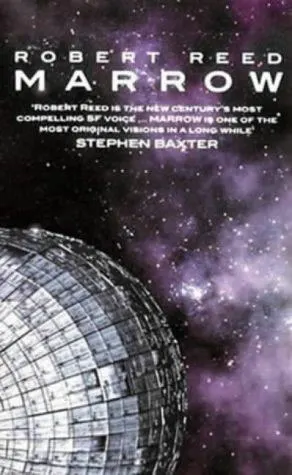
Books like Marrow
Begin in a castle rather than a starship: Mervyn Peake’s Gormenghast is the terrestrial cousin of Reed’s Great Ship, an environment so immense and ancient that its institutions feel like laws of nature. These three novels capture different parts of Marrow’s power: suffocating hierarchy, exhilarating deep time, and the discovery that the world is stranger than its inhabitants understand.
If you liked Marrow, you’ll love these
Not lookalikes — kindred books. Each one shares something essential with Marrow, and we tell you exactly what.
Peake’s landmark first Gormenghast novel turns architecture, hierarchy, and ritual into a complete civilization. The birth of Titus, heir to an immemorial earldom, sets the castle’s machinery in motion; meanwhile, the fiercely ambitious Steerpike begins testing where that machinery might break.
A lover of Marrow will recognize the peculiar thrill of entering a self-contained world whose inhabitants mistake inherited procedures for reality itself. Peake is less interested in technology than in how enormous institutions shape desire: every corridor carries history, every ceremony conceals a struggle for position. His luxuriant prose and grotesquely vivid cast make the castle feel simultaneously physical and mythic. Gormenghast became a cult classic because almost no other fiction creates such a total, oppressive imaginative environment—and Marrow readers are unusually well prepared to appreciate it.
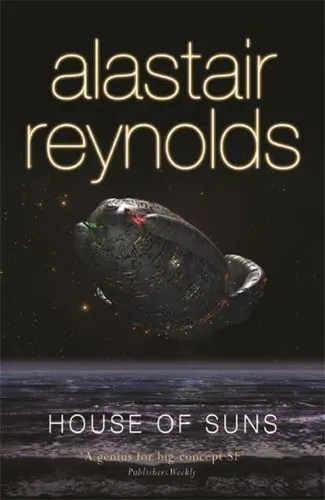
If Marrow’s immortal characters, abyssal timescales, and sense of cosmic engineering were what intoxicated you, House of Suns is the essential next book. Abigail Gentian has sent cloned versions of herself—the shatterlings—across the galaxy, where they travel separately for millennia before gathering to exchange memories. Reynolds makes that scale emotionally legible: civilizations flare and vanish between meetings, while personal loyalties survive across epochs.
Yet this is not grandeur for grandeur’s sake. Like Reed, Reynolds understands that longevity produces its own politics, resentments, secrets, and forms of vulnerability. The novel combines a formidable central mystery with spectacular astrophysical invention, but its real achievement is making deep time feel lived rather than merely calculated. Widely regarded as one of Reynolds’s finest standalones, it offers precisely the kind of overwhelming conceptual pleasure that makes Marrow difficult to replace.
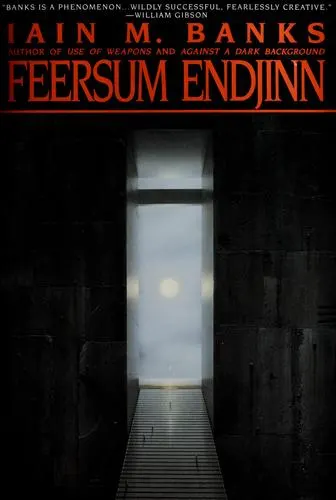
Feersum Endjinn delivers the delicious Marrow sensation that a seemingly comprehensible habitat is only the visible layer of something vastly larger. Its far-future inhabitants occupy an immense, decaying structure while a cosmic threat approaches, but Banks parcels out understanding through four sharply different voices—including Bascule, whose exuberant phonetic narration initially looks daunting and soon becomes irresistible.
What binds the novel to Marrow is its appetite for successive changes of scale. Political maneuvering, artificial afterlives, forgotten systems, and colossal engineering all coexist, and each new perspective forces you to reconsider what kind of world you have entered. Banks also brings more comedy, linguistic play, and anarchic energy than Reed, making the encounter feel complementary rather than imitative. This BSFA Award winner is among Banks’s boldest feats of world-building: demanding for a few pages, then astonishingly rewarding.