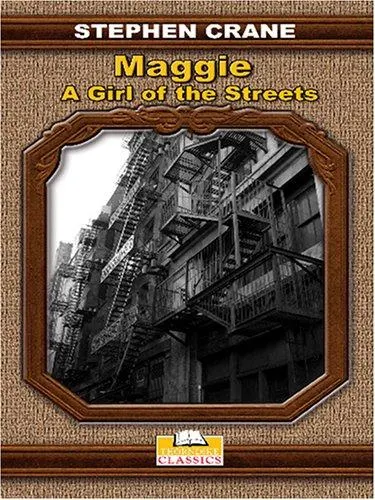
Books like Maggie: A Girl of the Streets
Maggie’s cruelty lies in the distance between its heroine’s hunger for beauty and a city that turns that hunger into another means of destroying her. These three novels share Crane’s unsentimental compassion, but each finds a different language for lives hemmed in by poverty, appetite, and judgment.
If you liked Maggie: A Girl of the Streets, you’ll love these
Not lookalikes — kindred books. Each one shares something essential with Maggie: A Girl of the Streets, and we tell you exactly what.
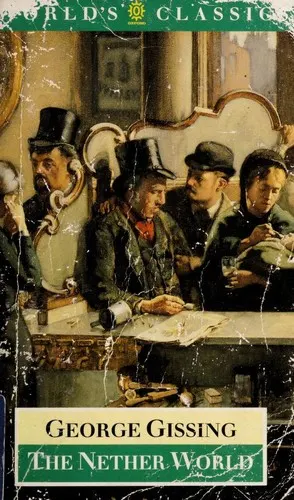
Gissing’s great novel of working-class London has Crane’s rare ability to depict poverty not as picturesque hardship but as an entire moral climate. Its characters live among bad air, exhausting labor, cramped rooms, and hopes continually reduced to what can be afforded. Like Crane, Gissing understands that deprivation deforms choices long before anyone makes them.
Yet The Nether World is no sociological exhibit. Its people desire money, love, dignity, and escape with painful particularity, and Gissing’s grave, lucid prose makes every frustrated possibility matter. Published only four years before Maggie, it is one of the fiercest achievements of Victorian realism—a novel whose relative neglect now feels almost scandalous. If Maggie left you wanting another book that refuses both sentimental rescue and contempt for the poor, this is indispensable.
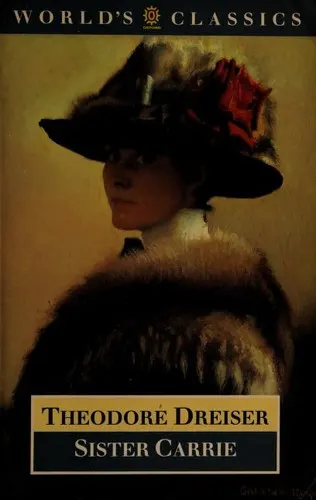
Carrie Meeber arrives in Chicago with little money and a keen responsiveness to everything the city displays: clothes, comfort, theaters, rooms in which life seems easier and more radiant. Dreiser, like Crane, sees urban desire as something manufactured—shop windows and social performances teach his heroine what to want, while economic dependence determines the available ways of obtaining it.
But Sister Carrie makes a fascinating counterpoint to Maggie because Dreiser follows female ambition without forcing it into a simple moral verdict. His deliberately plain, accumulating style turns rent, employment, attraction, and chance into pressures as consequential as character. Once denounced as scandalous, the novel became a foundational work of American naturalism. Reading it after Maggie reveals how two audacious early novels transformed the supposedly “fallen” woman from a cautionary emblem into the center of modern American fiction.
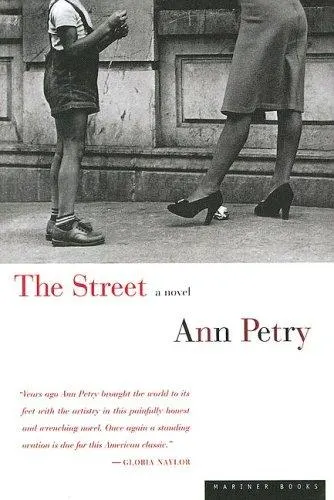
Ann Petry takes the naturalist question at the heart of Maggie—what becomes of a person when every part of her environment seems arranged against her—and gives it tremendous psychological and political force. Lutie Johnson, searching for a Harlem apartment for herself and her son, believes fiercely in work, independence, and the American promise of self-advancement. The street answers that belief with predatory attention, punishing costs, racial exclusion, and opportunities that arrive already compromised.
Petry’s prose can be sensuous one moment and suffocating the next; wind, noise, hallways, and overheated rooms become active pressures rather than background. The result is suspenseful as well as socially exact, with the gathering inevitability Crane achieves in a fraction of the space. Published in 1946, The Street became the first novel by a Black woman to sell more than a million copies, and its power has only grown clearer. Anyone pierced by Maggie’s doomed hope should read Petry’s masterpiece, which shows how much further that tradition could be carried.