Author
Books like Roger Zelazny
8 books we recommend to Roger Zelazny readers, drawn from Lord of Light, Nine Princes in Amber and A Night in the Lonesome October — each with the reason why.
If you loved Lord of Light
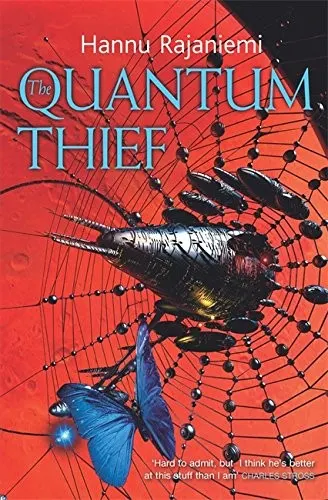
Jean le Flambeur begins in a prison where cooperation and betrayal are enforced as game theory; his rescue only recruits him into a far stranger contest. Rajaniemi, like Zelazny, trusts readers to catch up with a world of posthuman powers, engineered identities, contested memories, and technology so advanced that it governs existence like divine law.
But the deeper resemblance is Jean himself: a flamboyant strategist whose wit, vanity, and concealed purposes make intelligence feel thrilling. This dazzling debut helped restore genuine mystery to hard science fiction. If you loved watching Sam turn metaphysics into insurgent theater, you need to meet Jean le Flambeur.
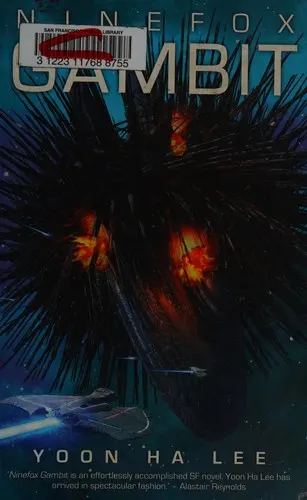
In Yoon Ha Lee’s empire, ritual observance and mathematical calendars determine what technology can do. When Captain Kel Cheris commits an act of tactical heresy, she is ordered to retake a fortress with the help of Shuos Jedao—a brilliant, centuries-dead general preserved as a weapon and remembered as a mass murderer.
Here is the Lord of Light kinship at its sharpest: belief is infrastructure, orthodoxy is coercion, and rebellion means altering the conceptual machinery of reality. Lee replaces Zelazny’s swagger with icy tactical pressure, then grounds the strangeness in the charged relationship between Cheris and Jedao. Winner of the Locus Award for Best First Novel and a Hugo and Nebula finalist, it is one of the defining space operas of its generation.
Jane is an enslaved changeling working in a factory when she encounters a damaged, sentient iron dragon—a predatory machine with the shape of legend and plans of its own. From there Swanwick builds a faerie world of assembly lines, shopping malls, magical hierarchies, and ancient rites, refusing to let myth remain picturesque or innocent.
The pleasure for a Zelazny reader lies in the collision: sacred archetypes meet ruthless modern systems, while a resourceful protagonist tries to use those systems without being consumed by them. Swanwick’s prose is fast, sardonic, and barbed; his wonders always have teeth. Now regarded as a cult classic of anti-fantasy, this is the rare book that fuses machinery and mythology without reducing either to decoration.
If you loved Nine Princes in Amber
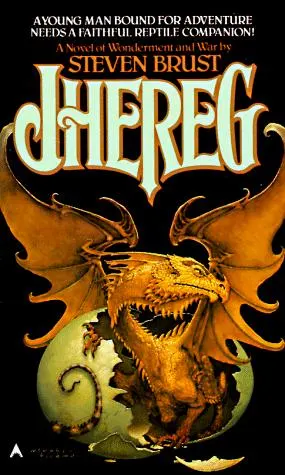
Vlad Taltos has Corwin’s crucial gift: he can make lethal intrigue feel like intimate conversation. He is an assassin operating among immensely powerful aristocrats, and Brust lets him explain an elaborate commission with sardonic economy while quietly exposing the loyalties and vulnerabilities beneath his professional cool.
Like Nine Princes in Amber, Jhereg is compact, fast, and allergic to ponderous world-building; its strange society emerges through jokes, grudges, negotiations, and danger. Brust’s long-running Vlad Taltos series has inspired unusually devoted readers, but this first volume remains one of fantasy’s sharpest demonstrations of how much character and invention a short novel can hold.

Imagine the vicious family dynamics of Amber stripped of courtly glamour and pushed toward horror. Carolyn and her adopted siblings were raised by the godlike Father, each mastering a different portion of his incomprehensible Library. Now Father is missing, and affection, trauma, rivalry, and the possibility of absolute power become inseparable.
Hawkins keeps changing the apparent scale and meaning of events, much as Zelazny turns a family quarrel into a struggle over reality itself. Yet the novel’s bizarre humor and emotional ferocity are entirely its own. This singular standalone became a word-of-mouth favorite because readers finish it desperate to hand it to someone else.
If you loved A Night in the Lonesome October
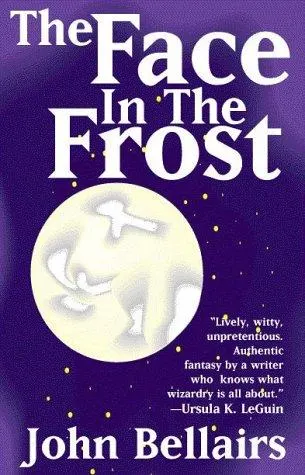
Bellairs performs the same difficult tonal trick as Zelazny: genial domestic comedy can turn, almost imperceptibly, into genuine dread. His wizards Prospero and Roger Bacon are charmingly fallible old friends, surrounded by magical objects that are funny until something begins using them for sinister purposes.
The magic is learned, eccentric, and tactile—full of riddles, mirrors, books, and half-understood rules—while Bellairs’s economical prose makes the darkness feel sharper rather than heavier. A cult classic of American fantasy, this is the rare novel that can make you laugh at breakfast and fear the hallway after midnight.
What if the great delight of Zelazny’s October Game was not merely its Gothic cast, but the sensation of gradually discovering what kind of game is being played? Connie Willis builds an even more elaborate mechanism from time travel, Victorian manners, missing objects, literary allusions, and seemingly disposable jokes. Her exhausted narrator, Ned Henry, is dispatched to 1888 on an assignment that becomes increasingly difficult to understand—and impossible to abandon.
Willis writes comic confusion with extraordinary control: every eccentricity may be evidence, and every recurrence becomes funnier as its significance changes. The novel won the Hugo Award, deservedly, but its real distinction is how often devoted readers return to it simply for pleasure. Few books make being cleverly outmaneuvered feel this satisfying.
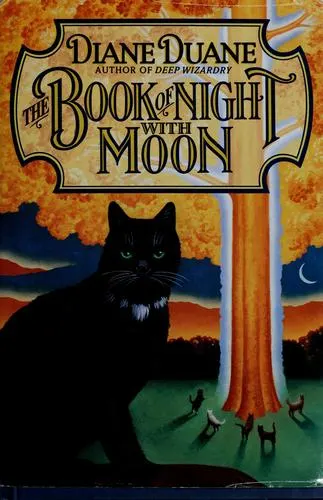
Rhiow is a New York cat, a wizard, and a member of the team responsible for maintaining the world-gates beneath Grand Central Terminal. Duane takes that premise completely seriously without draining it of charm. Her cats remain recognizably feline—practical, territorial, sensuous, and amused by humans—even while discussing ritual magic and threats to reality.
Like Snuff, Rhiow is competent because loyalty and attention matter more than swagger. Duane also shares Zelazny’s gift for making cosmic machinery comprehensible through concrete tasks: patrols, repairs, passwords, negotiations, and hard choices among companions. This beloved offshoot of her Young Wizards universe offers the particular pleasure of capable animals quietly doing indispensable work while humanity notices almost nothing.