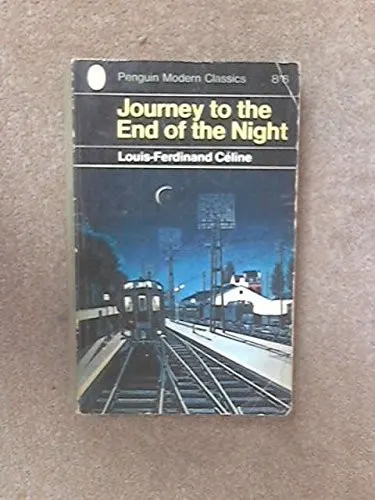
Books like Journey to the End of the Night
How can a novel make humanity seem irredeemable and still leave you exhilarated by the sound of a human voice? These three books answer with very different mixtures of invective, grotesque comedy and stylistic daring.
If you liked Journey to the End of the Night, you’ll love these
Not lookalikes — kindred books. Each one shares something essential with Journey to the End of the Night, and we tell you exactly what.
If Céline’s great discovery was that degradation could become a comic music, Beckett pushes that discovery toward delirious perfection. Molloy begins with a failing body, an uncertain journey and a narrator whose magnificent logic keeps collapsing beneath him. His calculations, compulsions and evasions turn helplessness into some of the funniest prose ever written.
The kinship lies less in shared bleakness than in velocity of mind: both books transform complaint into performance. Yet Beckett pares away Céline’s social panorama until only voice, habit and stubborn consciousness remain. The opening volume of Beckett’s celebrated postwar trilogy, Molloy is one of modernism’s essential black comedies—and reading it reveals just how intoxicating ruin can sound.
Ellison shares Céline’s taste for the picaresque ordeal: a young man enters the world expecting intelligible rules and instead encounters institutions that demand masks, obedience and self-betrayal. But Ellison’s unnamed narrator has a suppleness Céline’s Bardamu lacks. He can be furious, credulous, analytical and devastatingly funny, often within a single scene.
What makes Invisible Man indispensable here is its command of competing voices. Speeches, slogans, sermons, jazz rhythms and private confessions collide until language itself becomes a battlefield. Winner of the 1953 National Book Award and now firmly established as an American masterpiece, it offers the same exhilaration of seeing society stripped of its respectable explanations—while replacing Céline’s nihilism with a more searching, morally complicated intelligence.
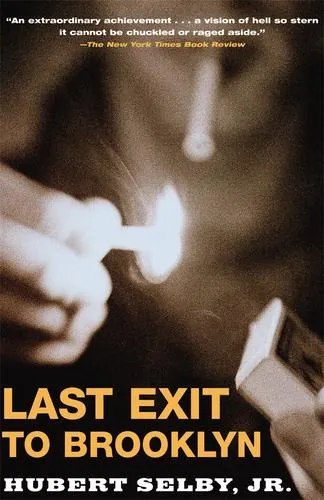
Selby writes as though conventional literary decorum were another lie the powerless cannot afford. In linked narratives set among people trapped by poverty, violence and frustrated desire, he dispenses with polished punctuation and lets speech arrive raw: taunts, boasts, fantasies and pleas tumble together with frightening momentum.
The result has Céline’s dangerous combination of ugliness and propulsion. Selby does not observe degradation from a safe satirical distance; he forces the reader inside its rhythms, where cruelty can be communal entertainment and tenderness appears in damaged, fleeting forms. Last Exit to Brooklyn became a notorious cult classic, faced an obscenity prosecution in Britain and profoundly influenced later writers of urban extremity. Its brutality is real, but so is its formal power: few novels make the reader feel so directly what happens when rage becomes an environment.