Books like Iliad
A Sicilian prince at evening prayers, sensing that revolution has made his whole order mortal, belongs closer to Achilles and Hector than he first appears. These three novels inherit different Iliadic gifts: tragic grandeur, intimate compassion, and the terrible momentum of collective violence.
If you liked Iliad, you’ll love these
Not lookalikes — kindred books. Each one shares something essential with Iliad, and we tell you exactly what.
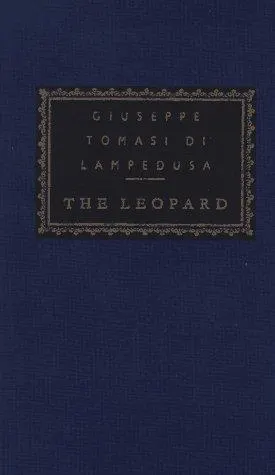
Prince Fabrizio possesses the physical majesty, pride, tenderness, and foreknowledge of an Iliadic hero. As Garibaldi’s revolution reaches Sicily, he understands that his aristocratic world is doomed even while it remains magnificent—much as Hector fights beneath the knowledge that Troy must fall.
Lampedusa’s great achievement is to make decline feel neither merely political nor nostalgic, but cosmic. Sensual beauty, family affection, vanity, appetite, and death occupy the same field of vision. Published posthumously and awarded Italy’s Strega Prize, The Leopard became one of the twentieth century’s supreme historical novels because it extends to the obsolete the grave, impartial pity Homer gives both victors and vanquished.
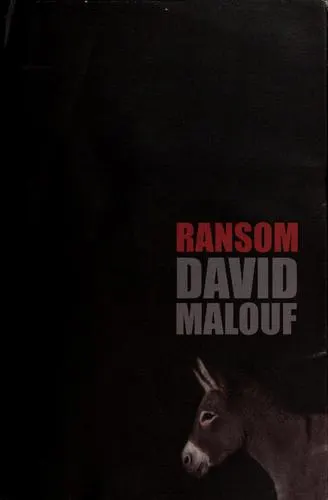
Ransom enters the Iliad during Achilles’ grief for Patroclus and Priam’s desperate need to recover Hector’s body, then discovers something radically new inside Homer’s most moving episode. Malouf strips away ceremonial grandeur just enough to reveal weather, food, animals, aging flesh, awkward conversation—the ordinary world that war and kingship have kept at a distance.
Its short, luminous sentences explore what happens when people step outside the roles assigned by legend: enemy, king, warrior, bereaved father. Regarded as one of Malouf’s finest late works, it does not imitate Homer or reduce him to modern psychology. It makes the ancient poem feel newly dangerous and tender. After reading it, Priam’s journey—and Achilles’ capacity for mercy—will never seem quite the same.
In the Brazilian backlands, an apocalyptic preacher gathers society’s discarded people while the young republic convinces itself that their settlement is an existential threat. Vargas Llosa moves among believers, soldiers, opportunists, journalists, fanatics, and bewildered witnesses, granting each a vivid inner logic without offering the reader a comfortable moral camp.
That divided sympathy is profoundly Homeric. Battle here is at once strategically confusing, physically exact, grotesque, courageous, and futile; ideology plays the role the gods play in the Iliad, enlarging private wounds into catastrophe. Widely regarded as one of the Nobel laureate’s masterpieces, the novel has the scale of an epic and the merciless intimacy of tragedy. Few modern books show so powerfully how honor and delusion can become indistinguishable—and how human beings remain singular even inside mass slaughter.