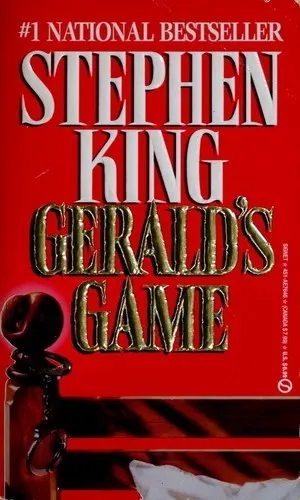
Books like Gerald's Game
After its locked-room ordeal, the appetite is for more than escape: ruthless psychological pressure, a mind forced into its darkest chambers, and ordinary objects made terrifyingly consequential.
If you liked Gerald's Game, you’ll love these
Not lookalikes — kindred books. Each one shares something essential with Gerald's Game, and we tell you exactly what.
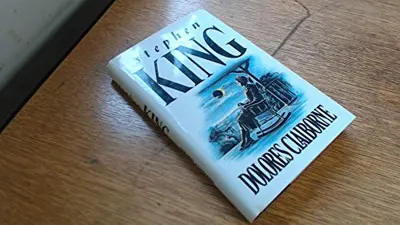
King conceived this as a companion to Gerald’s Game, but the kinship runs deeper than shared echoes. Dolores begins a police statement by denying one killing and admitting another, then speaks for an entire novel without chapter breaks. Her flinty, funny voice turns confession into combat.
Like Jessie, Dolores has endured male cruelty and learned that survival can require an unsentimental knowledge of power. King is superb here on memory, shame, class, and the private calculations women make when no rescuer is coming. It is among his finest character studies—and Gerald’s Game feels richer once you have heard Dolores tell her side of the darkness.

Five-year-old Jack believes the locked room he shares with his mother is the whole world. Because Donoghue lets him narrate, every household object acquires a personality and every adult horror must be inferred through a child’s bright, limited vocabulary.
That audacious perspective makes Room an ideal follow-up: it shares Gerald’s Game’s fascination with how an imprisoned mind reorganizes reality and how ingenuity grows from intimate knowledge of a tiny space. Yet its emotional engine is different—the fierce, complicated bond between mother and son. A Booker Prize finalist and a novel embraced far beyond literary circles, it earns its reputation by making terror and tenderness inseparable.

A woman lies in a clinic while a strange boy urgently questions her. Together they sift her recent memories, searching for the exact instant when something went wrong. The conversation keeps tightening, skipping past explanations and returning obsessively to details that may be warnings—or may already be too late.
Schweblin recreates the most unnerving quality of Gerald’s Game: consciousness itself becoming the scene of danger. Bodies cannot be trusted, memory offers no stable refuge, and love sharpens fear rather than relieving it. Shortlisted for the International Booker Prize, this slim Argentine novel has the compression of a nightmare and the precision of a trap. It is brief enough for one sitting and difficult to shake for weeks.