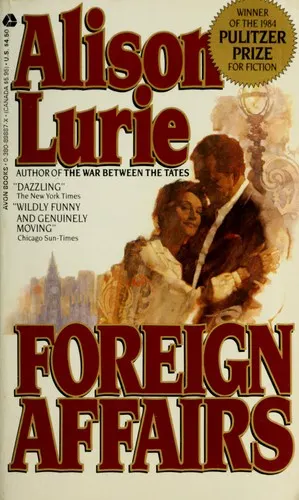
Books like Foreign Affairs
Foreign Affairs offers the rare pleasure of laughing at vanity, professional solemnity, and romantic fantasy while feeling the loneliness underneath. Its wit never cancels its tenderness; it makes self-deception look both ridiculous and necessary.
If you liked Foreign Affairs, you’ll love these
Not lookalikes — kindred books. Each one shares something essential with Foreign Affairs, and we tell you exactly what.

Taylor’s heroine, newly installed in a genteel London hotel, faces old age with pride, watchfulness, and an acute awareness of how easily society stops seeing women like her. Her fellow residents turn meals, visitors, and minor ailments into a complete social hierarchy, rendered with comedy as exact as Lurie’s academic and expatriate observations.
Shortlisted for the Booker Prize and now widely regarded as one of Taylor’s finest novels, Mrs Palfrey at the Claremont has the same precious balance of astringency and compassion. It never patronizes its lonely heroine or prettifies her circumstances. If Vinnie Miner’s sharpness, vulnerability, and stubborn appetite for life moved you, Mrs Palfrey is indispensable.
Macon Leary writes guides for travelers who would prefer never to feel they have left home. When his wife announces that she wants to leave him, his elaborate systems—travel routines, household contraptions, emotional evasions—begin to reveal both their absurdity and their cost.
Tyler shares Lurie’s gift for making character visible through tiny practical habits. Her eccentrics are genuinely funny, but never merely comic specimens; every oddity is also a defense against disorder or pain. Winner of the National Book Critics Circle Award, The Accidental Tourist is one of the great American novels about the frightening inconvenience of needing other people. Its dry humor gradually becomes something piercing and generous.
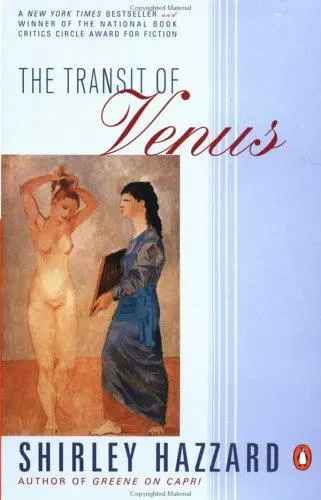
Two orphaned Australian sisters arrive in postwar England and enter a world whose codes of class, education, and desire they must learn without ever wholly belonging to it. Hazzard sees romance as Lurie does: not as an escape from social reality, but as a place where vanity, power, imagination, and chance become dangerously entangled.
The kinship lies especially in the intelligence granted to women assessing the stories available to them. Hazzard is more lyrical and ominous than Lurie, yet equally alert to conversational cruelty and the comedy of people mistaking privilege for merit. Winner of the National Book Critics Circle Award and now established as a modern classic, The Transit of Venus rewards rereading because almost every polished sentence carries a second meaning. Missing it would mean missing one of the century’s most formidable novels of love and self-invention.