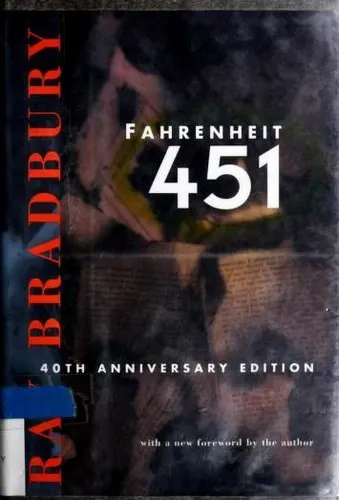
Books like Fahrenheit 451
What is left of us when a society makes curiosity dangerous—and who might we become if one forbidden idea breaks through? These three novels pursue that unease with very different kinds of power.
If you liked Fahrenheit 451, you’ll love these
Not lookalikes — kindred books. Each one shares something essential with Fahrenheit 451, and we tell you exactly what.

On an unnamed island, objects disappear: first from daily life, then from memory. Most people calmly adapt, while the Memory Police ensure that nothing lost is preserved. A novelist, sensing what this enforced forgetting destroys, hides someone who can still remember.
Where Bradbury writes in sparks and flames, Ogawa works through silence, absence, and accumulating dread. Both novels understand that authoritarianism conquers people not merely by banning things but by narrowing what they can imagine. A finalist for both the International Booker Prize and the National Book Award for Translated Literature, this haunting novel makes memory itself feel like an act of resistance.
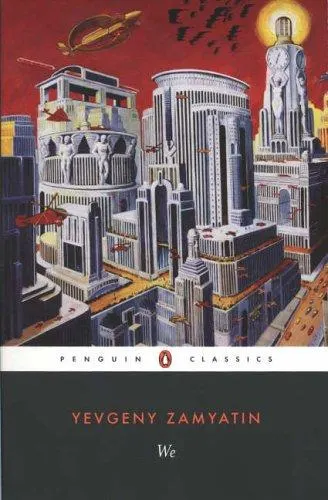
D-503 is an engineer in a glass-walled, mathematically ordered state where privacy, spontaneity, and unruly emotion have been designed away. He is proud of this perfect system—until an encounter introduces him to desires he cannot fit into its equations.
Readers who loved Montag’s destabilizing awakening will recognize the exhilaration and terror of a loyal citizen discovering an inner life. Zamyatin’s feverish, fractured prose turns consciousness into rebellion; the book feels less like a blueprint of dictatorship than a record of a mind catching fire. Written in the early 1920s and suppressed in the Soviet Union, We became one of the foundational modern dystopias and helped shape the tradition that followed. Reading it is like finding the dangerous ancestor hidden behind the books on Bradbury’s shelf.
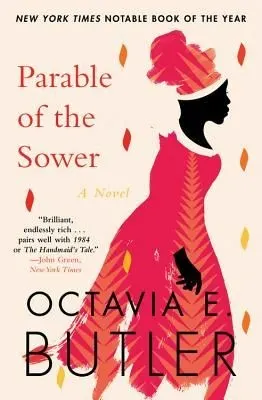
Lauren Olamina lives in a walled California community while the world outside deteriorates through inequality, climate disaster, and violence. Unlike those around her, she refuses comforting denial. She observes, prepares, writes, and begins forming an idea sturdy enough to carry into an uncertain future.
Fahrenheit 451 is not finally about saving printed objects; it is about recovering the capacity to think, choose, and build. Butler takes that moral imperative further. Her protagonist’s intelligence is practical rather than romantic, and her emerging philosophy asks what knowledge is for when institutions fail. Published in 1993, the novel has acquired an increasingly devoted readership because its foresight is unnerving—but its real force lies in refusing despair. It is a fierce, lucid story about turning attention into survival and survival into purpose.