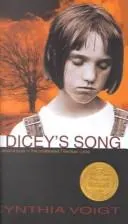
Books like Dicey's Song
Holding fast. Dicey’s strength lies not merely in endurance, but in slowly discovering that independence and belonging need not be enemies. These novels offer equally unsentimental portraits of capable young people learning what family can demand—and give.
If you liked Dicey's Song, you’ll love these
Not lookalikes — kindred books. Each one shares something essential with Dicey's Song, and we tell you exactly what.
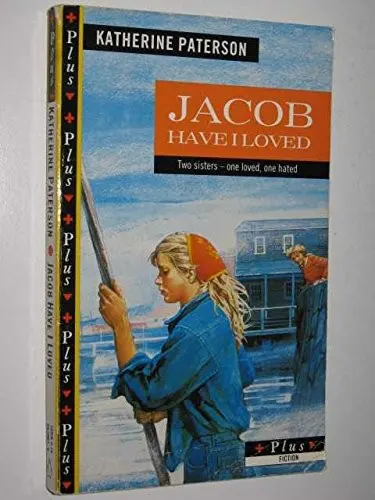
Sara Louise Bradshaw has Dicey’s competence, physical toughness, and dangerous habit of making herself indispensable. On her isolated island, she works hard while her gifted twin sister seems effortlessly to receive the admiration Sara Louise craves. Paterson treats jealousy not as a flaw to be corrected but as a painful signal that this intelligent girl needs a life she can call her own.
Like Dicey’s Song, this Newbery Medal winner respects work, anger, and silence. Its landscape feels lived in, its family bonds contain resentment as well as love, and its heroine’s growth never requires her to become sweeter or less formidable. Few novels understand so well the loneliness of being the reliable one.
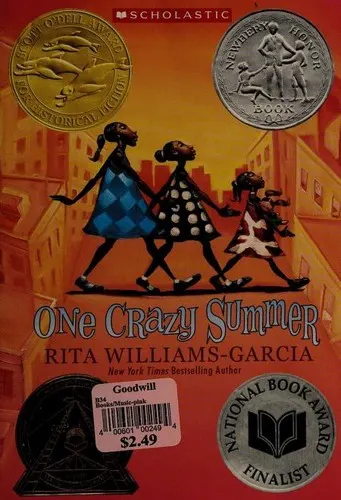
Eleven-year-old Delphine arrives in Oakland in 1968 with two younger sisters to manage and a mother who has little interest in mothering them. Delphine counts money, settles quarrels, and keeps fear to herself—the reflexes of an eldest child who has learned that vigilance is safer than need.
Williams-Garcia gives that burden wit and momentum rather than solemnity. As the sisters encounter their mother’s fierce privacy and a Black Panther summer program, Delphine begins to see that adults have histories children cannot immediately read. Honored with both a Newbery Honor and the Coretta Scott King Award, the novel earns its acclaim through an exceptionally alive family: funny, abrasive, loyal, and never reduced to a lesson. Readers who loved watching Dicey revise her understanding of Gram will recognize the emotional thrill of Delphine doing something similar.
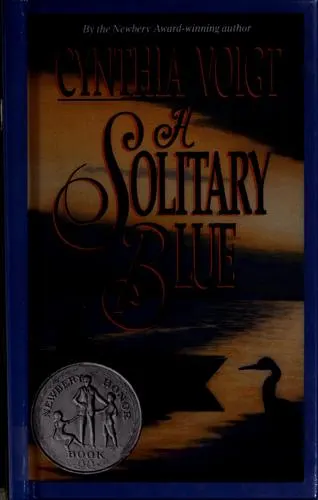
Voigt’s finest companion to Dicey’s Song turns toward Jeff Greene, a quiet boy living with his remote, scholarly father after his mother’s departure. When she reenters his life, Jeff’s hunger for affection makes him vulnerable to every shift in her attention. Voigt renders his confusion with characteristic restraint: through music, solitary routines, and the telling gap between what people promise and what they can actually give.
This Newbery Honor novel inhabits the same moral world as Dicey’s Song, but it is no repetition. Where Dicey armors herself through action, Jeff retreats into watchfulness; both must learn to distinguish genuine love from the performance of it. The result is one of Voigt’s most piercing books—a quiet, tidal novel whose emotional force keeps gathering long after the final page.