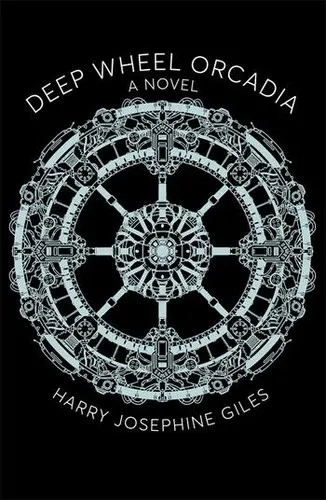
Books like Deep Wheel Orcadia
Deep Wheel Orcadia makes every page a negotiation between two kinds of home: the station’s enclosed metal world and the Orkney tongue whose English shadow accompanies it.
If you liked Deep Wheel Orcadia, you’ll love these
Not lookalikes — kindred books. Each one shares something essential with Deep Wheel Orcadia, and we tell you exactly what.
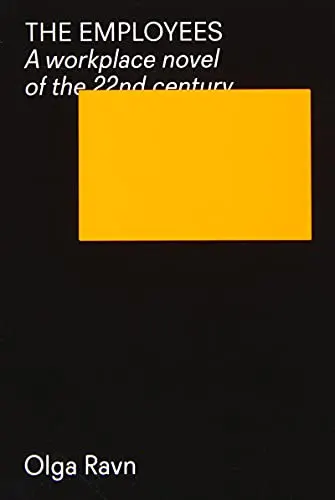
Like Giles, Ravn discovers that bureaucratic speech can become poetry. Her novel assembles numbered statements from the human and humanoid crew of the Six-Thousand Ship, whose encounters with mysterious objects begin unsettling their ideas about work, bodies and personhood. The clipped testimonies gradually form a haunting collective voice: comic, estranged and unexpectedly tender.
Shortlisted for the International Booker Prize, The Employees is one of the rare experimental novels whose formal ingenuity intensifies its emotional force. Readers who loved Orcadia’s fusion of lyric intimacy, communal life and space-station labor should find it irresistible.
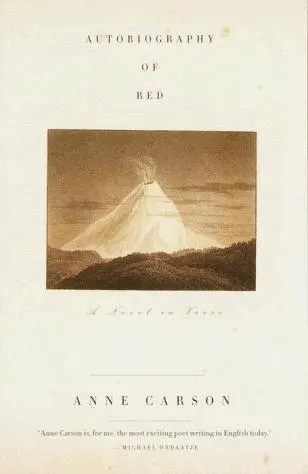
Carson’s celebrated “novel in verse” turns an ancient monster into Geryon, a red-winged boy trying to make art and survive the force of his desire for Herakles. Its kinship with Deep Wheel Orcadia lies not in scenery but in its exhilarating refusal to separate poetry from storytelling—or queerness from the work of inventing a language adequate to oneself.
Carson writes with icy wit and sudden, incandescent beauty: a photograph, a volcano or a lover’s gesture can open into an entire emotional climate. Now regarded as a modern cross-genre classic, Autobiography of Red offers the same thrill of realizing that the novel can be stranger, leaner and more intimate than convention allows.

Lanny listens to a village until its gossip, folklore, birdsong and half-heard conversations become a living organism. Voices drift across the page in curving streams of type, while the ancient, green Dead Papa Tooth gathers fragments of local speech. The result feels less narrated than overheard through soil, walls and leaves.
That attention to language as a habitat—not merely a tool—is what makes this Booker-longlisted novel such a strong companion to Giles’s work. Porter understands how a place is made by competing voices, how belonging can shelter and constrict, and how a child or outsider exposes a community’s hidden currents. Lanny is brief, uncanny and formally audacious; once read, its murmuring chorus is difficult to forget.