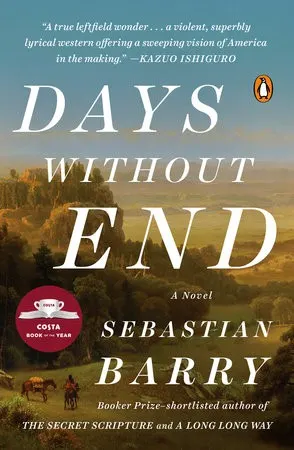
Books like Days Without End
At Swim, Two Boys turns history into a crowded, passionate song; In the Distance strips national legend down to one immigrant’s bewildered footsteps. The Color Purple completes the trio by finding, as Sebastian Barry does, a language in which suffering cannot extinguish tenderness.
If you liked Days Without End, you’ll love these
Not lookalikes — kindred books. Each one shares something essential with Days Without End, and we tell you exactly what.
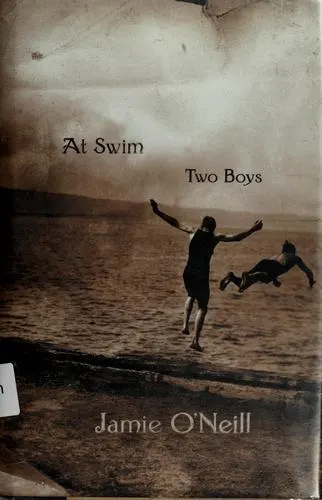
In 1915 Dublin, Jim Mack and Doyler Doyle promise to swim out to the Muglins rocks on Easter Sunday 1916. Around that private pledge, O’Neill gathers class conflict, political upheaval, desire and the painful invention of a self.
Like Days Without End, this is a love story that refuses to become small merely because history is enormous. O’Neill’s sensuous, Joycean prose is more demanding than Barry’s, but it has the same gift for making male tenderness feel brave, ordinary and world-altering. Long cherished as a modern queer classic, it is one of those novels whose devoted readers speak of having lived inside it.
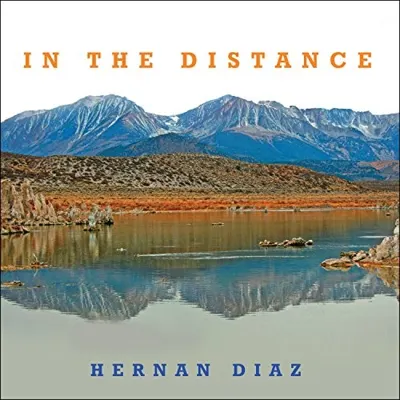
Håkan, a young Swedish immigrant, becomes separated from his brother and travels through an America he barely understands. Diaz takes the materials of the western—immensity, violence, wandering—and makes them strange again.
Where Thomas McNulty survives through companionship and verbal buoyancy, Håkan confronts the terrible distortions produced by solitude and legend. Both novels expose the human cost hidden beneath America’s heroic stories, especially for the foreign-born men pressed into them. A Pulitzer Prize finalist, In the Distance is austere, hallucinatory and unforgettable: it leaves the landscape looking larger and the myths built upon it much smaller.
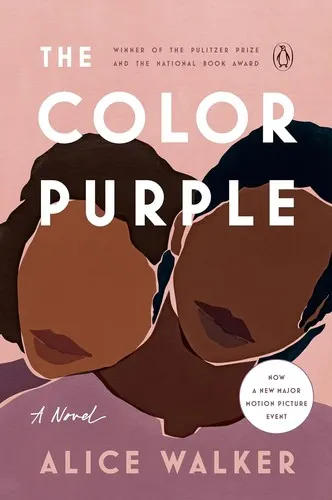
The deepest kinship is voice. Celie begins writing letters to God because almost no one else will hear her, and her plainspoken language gradually reveals wit, judgment, hunger and astonishing emotional range. As with Thomas McNulty’s narration, apparent simplicity becomes a complete moral vision.
Walker also understands that love among people denied dignity is not decorative consolation but a form of resistance. Brutality and comedy, erotic awakening and found family coexist without cancelling one another. Winner of both the Pulitzer Prize and the National Book Award, The Color Purple has earned its immense readership sentence by sentence; anyone moved by Barry’s union of cruelty, beauty and queer tenderness should experience Celie’s voice firsthand.