Books like Contact
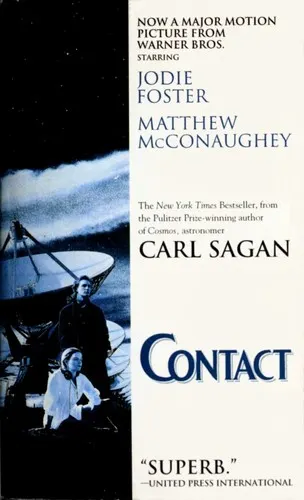
After Contact, it is hard to settle for science fiction in which discovery is merely machinery for the plot. What lingers is the exhilaration of disciplined curiosity: evidence tested against longing, cosmic wonder entangled with politics and faith, and the possibility that learning we are not alone might change our sense of being human.
If you liked Contact, you’ll love these
Not lookalikes — kindred books. Each one shares something essential with Contact, and we tell you exactly what.
A group of scientists gathers at a secret desert installation to decipher what may be a message carried by neutrinos from deep space. Lem makes the work itself gripping: rival interpretations, seductive mistakes, disciplinary blind spots, and the constant danger that governments will turn knowledge into a weapon.
Where Sagan dramatizes the grandeur of asking the universe a question, Lem—one of science fiction’s great philosophical novelists—asks whether human minds could recognize the answer. His Master’s Voice is more skeptical and abrasive than Contact, but that makes it an essential companion: a fiercely intelligent novel about the limits of inference, the vanity of experts, and the stubborn magnificence of trying to understand anyway.
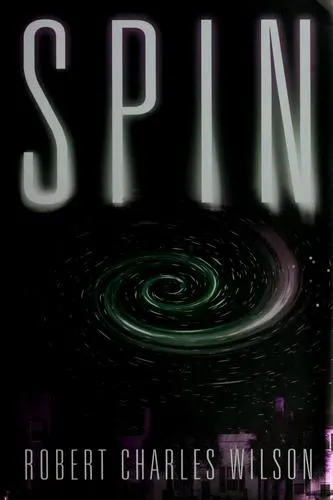
One night, the stars disappear. Three childhood friends watch it happen, and the consequences shape the rest of their lives. Wilson gives the mystery an immense cosmic scale while keeping the novel emotionally close: scientific breakthroughs arrive alongside jealousy, illness, estrangement, and the search for some way to live meaningfully under an incomprehensible sky.
The Hugo-winning Spin shares Contact’s rare ability to make hard-won knowledge feel both intellectually satisfying and personally momentous. Its science generates genuine awe, but its deepest subject is how different people respond when reality becomes larger and stranger than their inherited beliefs. The result is lucid, humane, and compulsively readable—the kind of novel whose central image stays with readers for years.
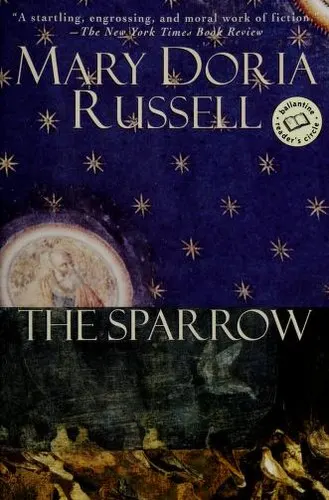
When evidence of extraterrestrial music is detected, a Jesuit-sponsored expedition sets out to meet its makers. The novel opens after the mission has ended, with one shattered survivor returning to Earth, then reconstructs how an undertaking born from scholarship, friendship, and hope reached that point.
Russell treats first contact not as spectacle but as an encounter capable of testing language, ethics, faith, and every comforting assumption people carry with them. Readers who loved Contact’s refusal to reduce science and religion to a simple contest will find an even more harrowing version of that conversation here. Winner of the Arthur C. Clarke and James Tiptree Jr. awards, The Sparrow has inspired unusually devoted readers because it combines intellectual seriousness with devastating emotional force. It is darker than Sagan’s novel, but equally committed to the idea that reaching toward the unknown reveals who we are.