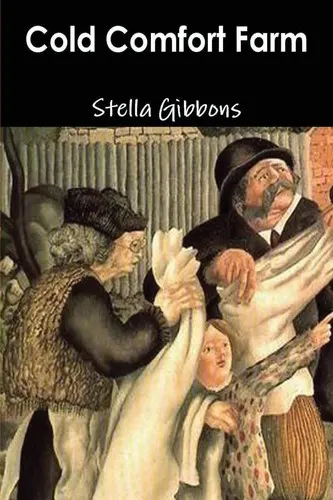
Books like Cold Comfort Farm
The happiest Cold Comfort Farm reader relishes comedy that punctures solemnity, heroines who refuse to be intimidated by other people’s nonsense, and prose sharp enough to make eccentricity feel like a fine art.
If you liked Cold Comfort Farm, you’ll love these
Not lookalikes — kindred books. Each one shares something essential with Cold Comfort Farm, and we tell you exactly what.
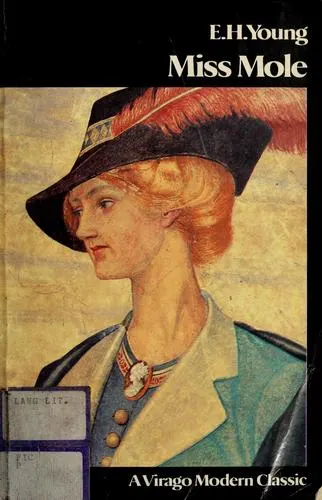
Hannah Mole, a financially precarious woman with a dangerously quick wit, becomes housekeeper to a respectable minister’s family. Like Flora Poste, she enters a household governed by stale assumptions and immediately perceives its absurdities—but Hannah must conceal her intelligence as often as she deploys it.
Young’s comedy is quieter than Gibbons’s, yet just as exact about the ways melodrama, propriety and masculine self-importance can imprison people. Hannah’s private commentary is delicious; beneath it lies a compassionate understanding of what clever, unmarried women had to do to survive. Winner of the James Tait Black Memorial Prize, Miss Mole is one of those rediscovered classics whose neglect seems baffling once you encounter its formidable heroine.
Cluny has an unladylike fascination with plumbing and an even more alarming habit of treating class rules as though they ought to make sense. When she is sent into service at a country house, her practical curiosity begins exposing the arbitrariness of everyone else’s world.
What links her to Flora Poste is not merely competence but comic freedom: both women decline to accept that inherited conventions are laws of nature. Sharp writes with buoyant precision, turning social embarrassment into beautifully timed farce while making Cluny’s appetite for life genuinely exhilarating. Ernst Lubitsch’s beloved film adaptation confirms the story’s comic durability, but the novel’s sly narration and irrepressible heroine are pleasures the film cannot replace.
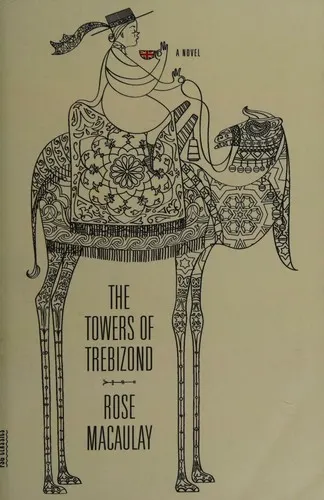
It begins with Aunt Dot proposing to take a camel to Turkey, accompanied by an austere clergyman and a narrator whose cool voice makes every escalating absurdity funnier. Their earnest schemes—religious, feminist and cultural—receive the same sort of affectionate deflation Gibbons gives rural doom and literary grandiosity.
Macaulay’s final novel has Cold Comfort Farm’s gift for placing sensible syntax beside magnificent lunacy, but its comedy opens onto deeper questions about faith, freedom and self-deception. That tonal daring helped earn it the James Tait Black Memorial Prize and has kept its celebrated opening line in circulation for decades. Read it for the camel and the clerical chaos; remember it because the wit eventually reveals unsuspected depths.