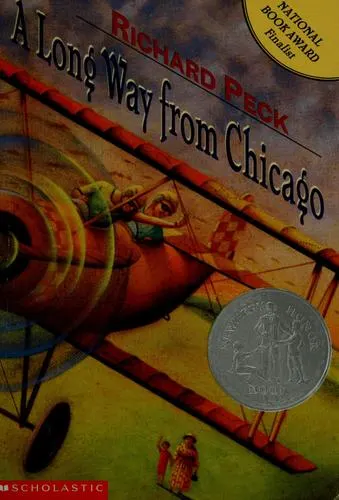
Books like A Long Way from Chicago
Big-hearted mischief. Peck’s finest trick is turning outrageous, sharply comic episodes into a child’s gradual recognition of an older woman’s courage, cunning, and fiercely disguised love. These novels offer that same pleasure: humor that deepens rather than dilutes their emotional force.
If you liked A Long Way from Chicago, you’ll love these
Not lookalikes — kindred books. Each one shares something essential with A Long Way from Chicago, and we tell you exactly what.
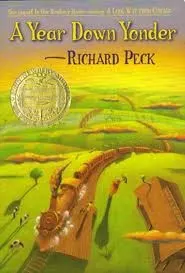
The essential next book—and not merely more of the same. Mary Alice returns to Grandma Dowdel’s Illinois town in 1937, this time without Joey and for an entire school year. Forced into closer quarters, she begins to see the calculation beneath Grandma’s apparent lawlessness: every ambush, deception, and social outrage has a target and a moral logic.
Peck gives Mary Alice a drier, more independent voice while preserving his immaculate comic timing and gift for the devastating final sentence. This Newbery Medal winner turns a formidable comic creation into something rarer: a fully understood human being. Anyone who leaves Grandma Dowdel after one book is leaving her story half-heard.
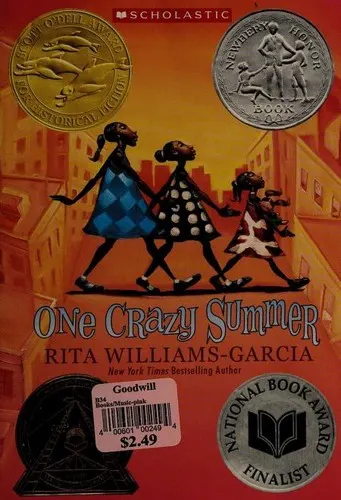
Eleven-year-old Delphine has the same wary competence that makes Joey such a satisfying narrator. When she and her younger sisters are sent to Oakland in 1968 to stay with Cecile, the mother who abandoned them, Delphine must manage meals, tempers, and expectations while trying to decipher an adult who refuses to explain herself.
Williams-Garcia is wonderfully alert to the gap between what children notice and what they understand. The sisters are genuinely funny—squabbling, performing, testing boundaries—but the comedy gradually opens onto questions of dignity, political awakening, and the hidden lives of adults. Its Newbery Honor and Coretta Scott King Award reflect how deftly it joins historical weight to intimate family storytelling. Delphine’s clear-eyed voice is extraordinarily hard to leave.
Grandpa E. Rucker Blakeslee begins this beloved novel by announcing, only weeks after his wife’s death, that he intends to marry the much younger Miss Love Simpson. Fourteen-year-old Will Tweedy watches the resulting uproar with fascination, embarrassment, and an appetite for a good story.
What connects Burns to Peck is not simply the vivid grandparent. It is the way both writers let a young narrator misread—and slowly reassess—an older person whose scandalous behavior conceals emotional intelligence. Burns fills Will’s voice with vernacular snap, comic exaggeration, gossip, and dawning moral seriousness. Long cherished as a modern Southern classic, Cold Sassy Tree has the expansive pleasure of family legend while remaining piercingly intimate: it makes growing up feel like learning that every outrageous story has another story hidden inside it.