Author
Books like Yukito Ayatsuji
3 books we recommend to Yukito Ayatsuji readers, drawn from The Decagon House Murders — each with the reason why.
If you loved The Decagon House Murders
This landmark of Japanese puzzle fiction helped inspire the shin-honkaku revival to which Ayatsuji belongs. An artist leaves behind plans for a grotesquely elaborate murder, then dies in a locked room; decades later, the apparently unrealized scheme remains unsolved.
Shimada directly challenges you to beat the detective, and every necessary clue is supplied. Like The Decagon House Murders, it converts apparent excess into exact machinery: its bizarre premise is not decoration but misdirection engineered with nerve and precision. The eventual explanation is startlingly simple, completely concrete, and liable to send you back through earlier pages in disbelief. For anyone intoxicated by Ayatsuji’s compact with the reader, this is essential.
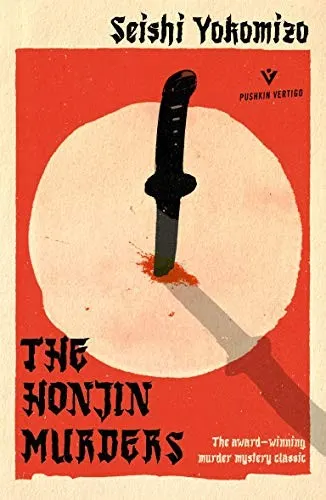
A wedding night ends in blood inside a room sealed from within, with an ominous musical instrument sounding nearby. Into this richly eerie scene comes the rumpled, stammering Kosuke Kindaichi, making his first appearance in the novel that established one of Japan’s most beloved detectives.
Where Ayatsuji constructs a whole novel as a trap, Yokomizo focuses that same ingenuity into one gleaming locked-room problem. The physical clues matter—tracks, sounds, objects, distances—and the atmosphere never substitutes for logic. First published in 1946, it remains a foundational Japanese mystery because its mechanism is as memorable as its mood. Reading it reveals part of the tradition Ayatsuji reinvented, while delivering a superbly satisfying impossibility in its own right.
Imamura asks a thrillingly dangerous question: can a rigorously fair detective puzzle survive when the impossible is genuinely possible? A university mystery club’s excursion is disrupted by a catastrophe, and then a murder occurs under circumstances that even the new rules of reality cannot readily explain.
The supernatural element does not excuse loose reasoning; it makes the reasoning stricter. Every extraordinary condition becomes another rule to test, exploit, or misunderstand, while the novel keeps inviting the reader to construct a solution alongside its amateur sleuths. Winner of the Ayukawa Tetsuya Award and a sensation in Japanese mystery rankings, it has the same playful seriousness about clueing that powers The Decagon House Murders—but pushes fair play into territory that seems designed to break it. Watching the puzzle hold is exhilarating.