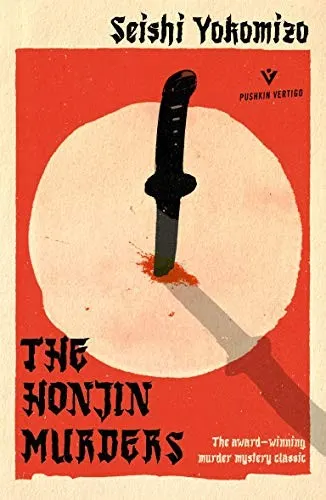
Books like The Honjin Murders
And that is why the solution alone is not enough: the best successor must also provide meticulous clueing, gothic unease, and the sense that an ancient household is concealing something intellectually outrageous.
If you liked The Honjin Murders, you’ll love these
Not lookalikes — kindred books. Each one shares something essential with The Honjin Murders, and we tell you exactly what.
Shimada takes Yokomizo’s delight in an apparently unconstructable crime and pushes it toward delirium. An artist is found dead in a locked room after describing a grotesque plan involving astrology and the bodies of several women; decades later, the case remains unsolved.
Diagrams, documents, and an explicit challenge to the reader make this landmark of modern Japanese honkaku detection unusually participatory. Yet its elaborate machinery never feels sterile: obsession and family history give the puzzle a genuine chill. If the physical impossibility at the center of The Honjin Murders made you impatient to test yourself against another master, this is essential.
The natural next encounter with Kosuke Kindaichi is also widely regarded as one of Yokomizo’s masterpieces. Returning from war, Kindaichi travels to an isolated island to deliver a dead comrade’s warning: his sisters will be murdered.
Here Yokomizo expands everything that distinguished The Honjin Murders—the shabby, deceptively diffident detective; the suffocating authority of old families; the collision between folklore and exact reasoning. The postwar setting matters morally as well as atmospherically: Kindaichi enters a community whose inherited order has survived, but not intact. Darker and more expansive than his debut, it shows how powerfully Yokomizo could join fair-play ingenuity to social decay.
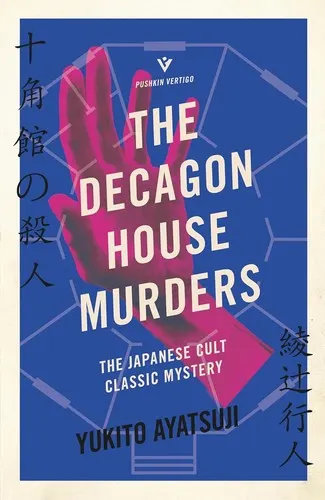
Seven university mystery-club members visit an island where an unsolved mass murder occurred; they stay in a ten-sided house and call one another by the names of famous detective writers. Ayatsuji turns that knowingly artificial setup into a ruthlessly controlled reading experience.
Published in 1987, this debut is widely credited with helping launch Japan’s shin-honkaku revival—the movement that reclaimed elaborate, reader-solvable mysteries in Yokomizo’s tradition. Every room, timetable, and casual exchange seems to invite scrutiny, while the clean modern prose steadily tightens the trap. Its reputation rests on structural audacity rather than atmosphere alone: it makes you reconsider how confidently you have been reading. Anyone who relished being outmaneuvered by The Honjin Murders should not miss the novel that helped renew its entire school of detection.