Author
Books like Vladimir Voinovich
3 books we recommend to Vladimir Voinovich readers, drawn from The Life and Extraordinary Adventures of Private Ivan Chonkin — each with the reason why.
If you loved The Life and Extraordinary Adventures of Private Ivan Chonkin
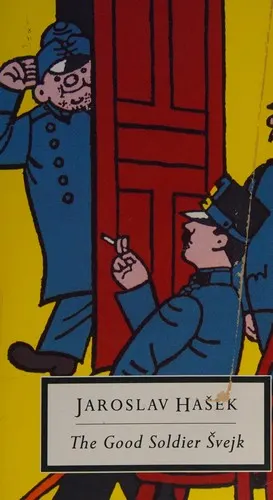
Švejk is Chonkin’s great literary ancestor: an apparently simple soldier whose literal-minded obedience turns military authority into self-parody. Whether he is genuinely foolish or conducting an exquisitely patient rebellion never becomes entirely clear—and that ambiguity powers the joke.
Hašek builds the novel from tavern stories, bureaucratic tangles, irrelevant anecdotes, and orders that collapse under their own logic. Yet Švejk is more than an antiwar comic mechanism. Like Chonkin, he survives because his appetite for ordinary life is stronger than the state’s grandiose abstractions. Unfinished but inexhaustibly influential, this Czech classic gave Europe one of its enduring names for resistance through ostensible compliance. Anyone who loves Voinovich’s collision of innocence and institutional lunacy should meet the character who helped make that collision a tradition.
For the warmth, village comedy, and crowded humanity of Chonkin, read Iskander’s exuberant cycle about Sandro, a charming rogue from the Abkhazian village of Chegem. Sandro’s tales expand into a whole comic civilization of feasts, quarrels, family legends, vanity, cunning, and extravagant storytelling.
What makes the kinship profound is Iskander’s sense of proportion. Official Soviet history may insist on its own magnificence, but village memory measures rulers against food, kinship, embarrassment, and common sense. Even Stalin’s presence can be absorbed into a story governed by older, more humane laws. Iskander’s masterpiece is beloved for its generous voice: satirical without becoming arid, affectionate without becoming sentimental. It offers the rare pleasure of entering a fictional community so vivid that leaving it feels like losing relatives.
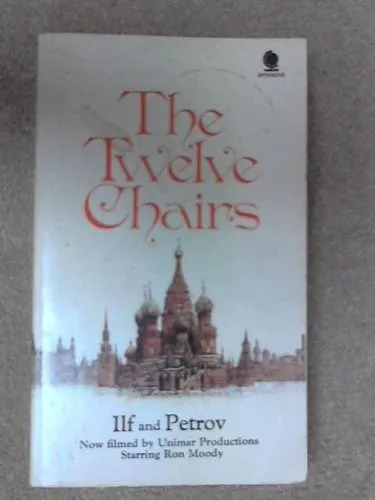
If Chonkin’s brisk escalation from a small absurdity into a systemic fiasco delighted you, Ilf and Petrov sharpen that pleasure into a dazzling picaresque. A former aristocrat learns that family jewels were hidden in one chair from a dispersed dining set; his search soon brings him into partnership with Ostap Bender, a magnificently resourceful con man.
The quest becomes a tour through a society where everyone is improvising around shortages, slogans, petty offices, and other people’s credulity. The comedy is faster and more worldly than Voinovich’s, but it shares his gift for exposing an entire order through exact, ridiculous details. Ostap became one of Russian literature’s most quoted and adored rogues, and the novel’s jokes entered everyday speech. To miss it is to miss one of the foundational comic portraits of Soviet life—and one of fiction’s most irresistible swindlers.