Author
Books like Theodore Dreiser
3 books we recommend to Theodore Dreiser readers, drawn from Sister Carrie — each with the reason why.
If you loved Sister Carrie
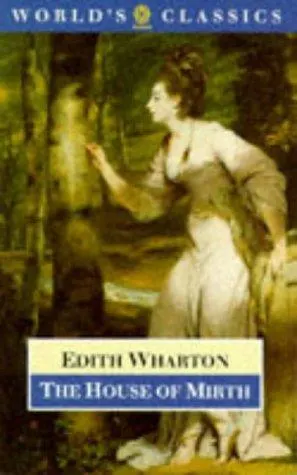
Lily Bart, like Carrie, inhabits a world in which beauty has an exchange value and comfort always comes with terms attached. Wharton is more polished and epigrammatic than Dreiser, but beneath her elegance lies the same pitiless question: how freely can anyone choose when money governs every apparent choice?
The novel opens with Lily already calculating the cost of small decisions, and Wharton makes those calculations unbearably suspenseful. Carrie’s instinctive adaptability meets its tragic counterpoint in Lily’s mixture of intelligence, pride, and hesitation. A bestseller in 1905 and now one of Wharton’s defining achievements, The House of Mirth is indispensable if you admired Dreiser’s refusal to separate private longing from economic power.
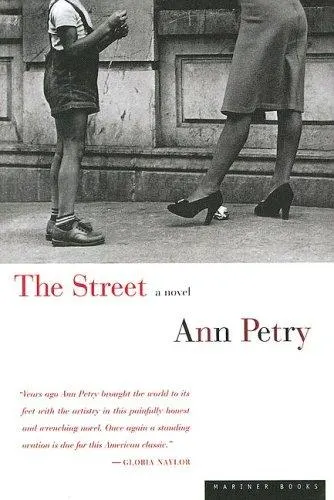
Petry takes naturalism’s central insight—that environment can act upon a person with almost physical force—and gives it furious new precision. Lutie Johnson arrives on Harlem’s 116th Street looking for an apartment and a better life for herself and her son; from the opening pages, wind, buildings, wages, racism, and sexual danger seem to press against her ambitions.
What connects Lutie to Carrie is not a similar fate but a similarly complicated hunger for independence and material security. Petry never sentimentalizes that hunger, nor does she mistake social constraint for abstract destiny: she shows exactly who profits from every closed door. The first novel by an African American woman to sell more than a million copies, The Street remains a landmark because its social argument is inseparable from its mounting narrative pressure. Dreiser’s city feels indifferent; Petry’s feels predatory.
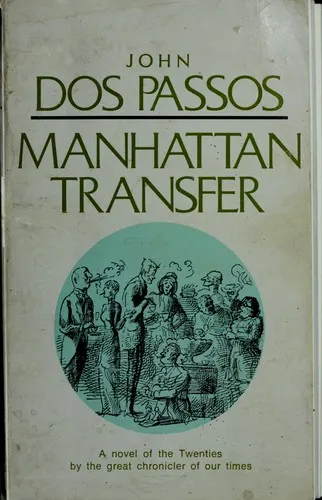
If the most memorable presence in Sister Carrie was ultimately Chicago and New York—their crowds, advertisements, theaters, restaurants, and ceaseless manufacture of envy—Manhattan Transfer is the novel to read next. Dos Passos disperses attention across many lives, cutting rapidly among strivers, laborers, performers, failures, and the comfortably corrupt until the city itself seems to become the protagonist.
Its modernist montage is far more experimental than Dreiser’s method, yet it pursues the same revelation: individual dreams are shaped by vast systems their dreamers barely perceive. Published in 1925, it established Dos Passos as a major innovator and helped create the vocabulary of the modern city novel. Reading it after Sister Carrie is like watching Dreiser’s urban world accelerate, fracture, and blaze into electric light.